Active Governance Starts With the Decision
Customers don’t experience governance through policies and frameworks. They experience it when they need to use data. As AI becomes part of that decision-making process, trust, business knowledge and governance need to be there too.

Executive Summary
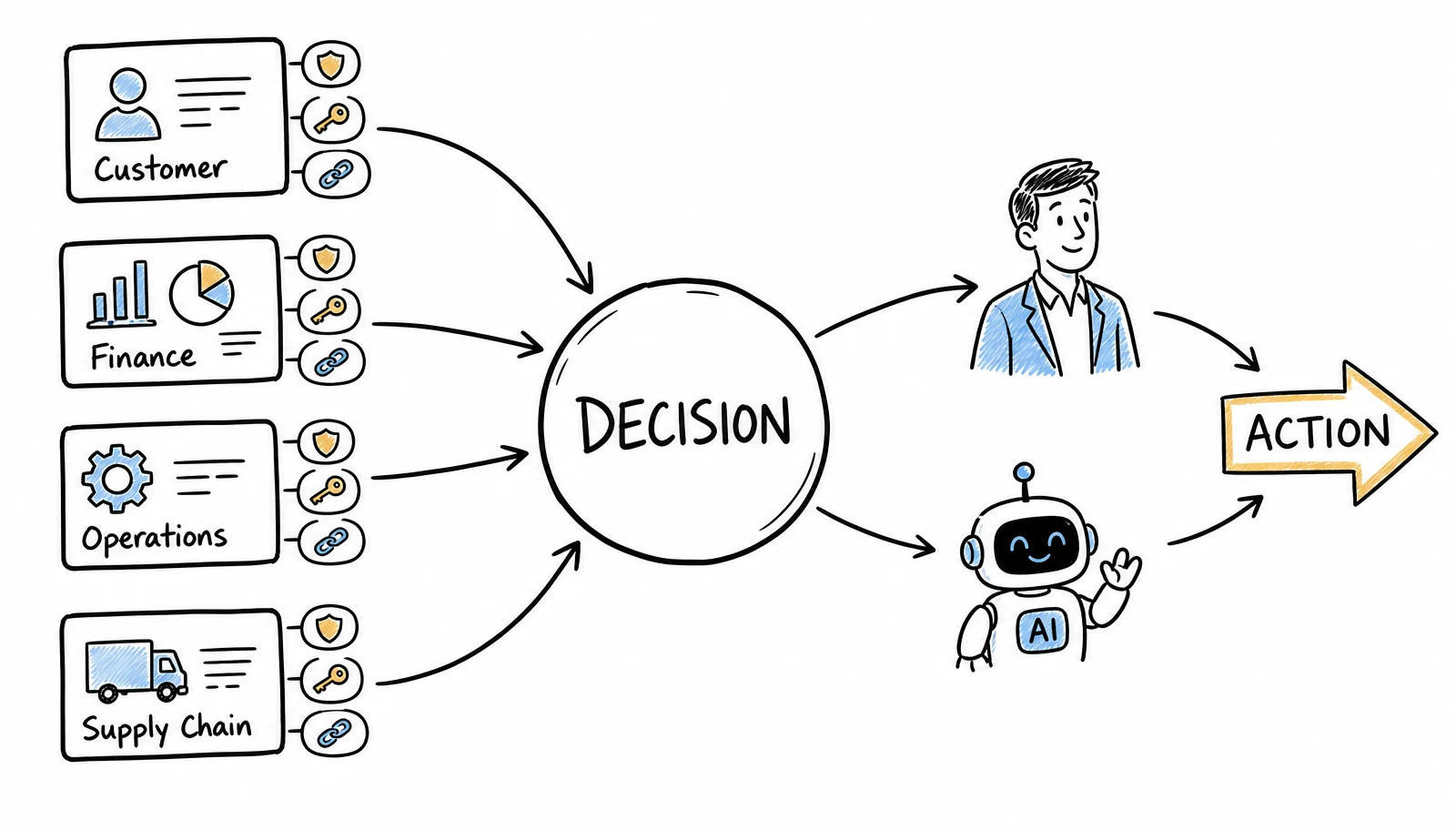
Most conversations I have with customers about data begin with something the business is trying to achieve. An operational problem needs an answer. Important information sits across several systems. Different teams have reached different versions of the truth. A decision takes too long because people are still finding, checking and reconciling the information behind it. Increasingly, there is also an AI use case that looks promising, provided the organization can trust what sits underneath it.
Governance is part of many of these conversations, but it is rarely how the problem is described. What matters to the person making the decision is whether the information can be found, understood and trusted, whether it can be used appropriately, and whether there is enough confidence in the answer to act.
That is what caught my attention in Gartner’s Top Trends for Data and Analytics for 2026. Gartner identifies decision governance as increasingly important as AI agents participate in more strategic, tactical and operational decisions. Gartner also predicts that by 2029, explicitly modeled business decisions will be five times more trusted and 80% faster than ungoverned decisions.
The combination of trust and speed is important. We sometimes talk as though organizations have to choose between them: move quickly or introduce more control. But if AI is going to help decisions happen faster, the information and business knowledge behind those decisions need to be trustworthy enough to keep up.
The scale of that challenge can feel enormous. Cameron Price has a useful way of thinking about where to begin:
“Think big, start small. Keep your North Star in sight, but start with one decision. It makes the ambition achievable.”
Cameron Price, Founder & CEO, Data Tiles
Rather than spend the rest of this article talking about that idea in theory, let’s work through what it can look like in practice.
Start With One Decision
Supply chain is a good example because the consequences of a poor decision are easy to understand. Something expected on Tuesday arrives on Friday, production is disrupted, an order is missed, additional freight is needed or a customer commitment is put at risk.
By the time everyone can see that a shipment is late, however, much of the opportunity to prevent the problem may already have passed.
So let’s start earlier with a business decision:
“Which suppliers are most likely to create late shipments, what could those delays affect, and where should we intervene first?”
That question gives us a useful boundary.
We don’t need every piece of supply-chain data the organization owns. We need the information that helps somebody understand this particular risk well enough to make a better decision.
Delivery history is obviously relevant, but it doesn’t tell the whole story. Supplier performance may be changing. Quality issues could be increasing. Procurement information provides another part of the picture, while logistics events can show emerging disruption. Financial-health signals may indicate a risk that hasn’t yet appeared in delivery performance.
Looking at one of those signals alone could be misleading. Looking at them together starts to build a picture someone can act on.
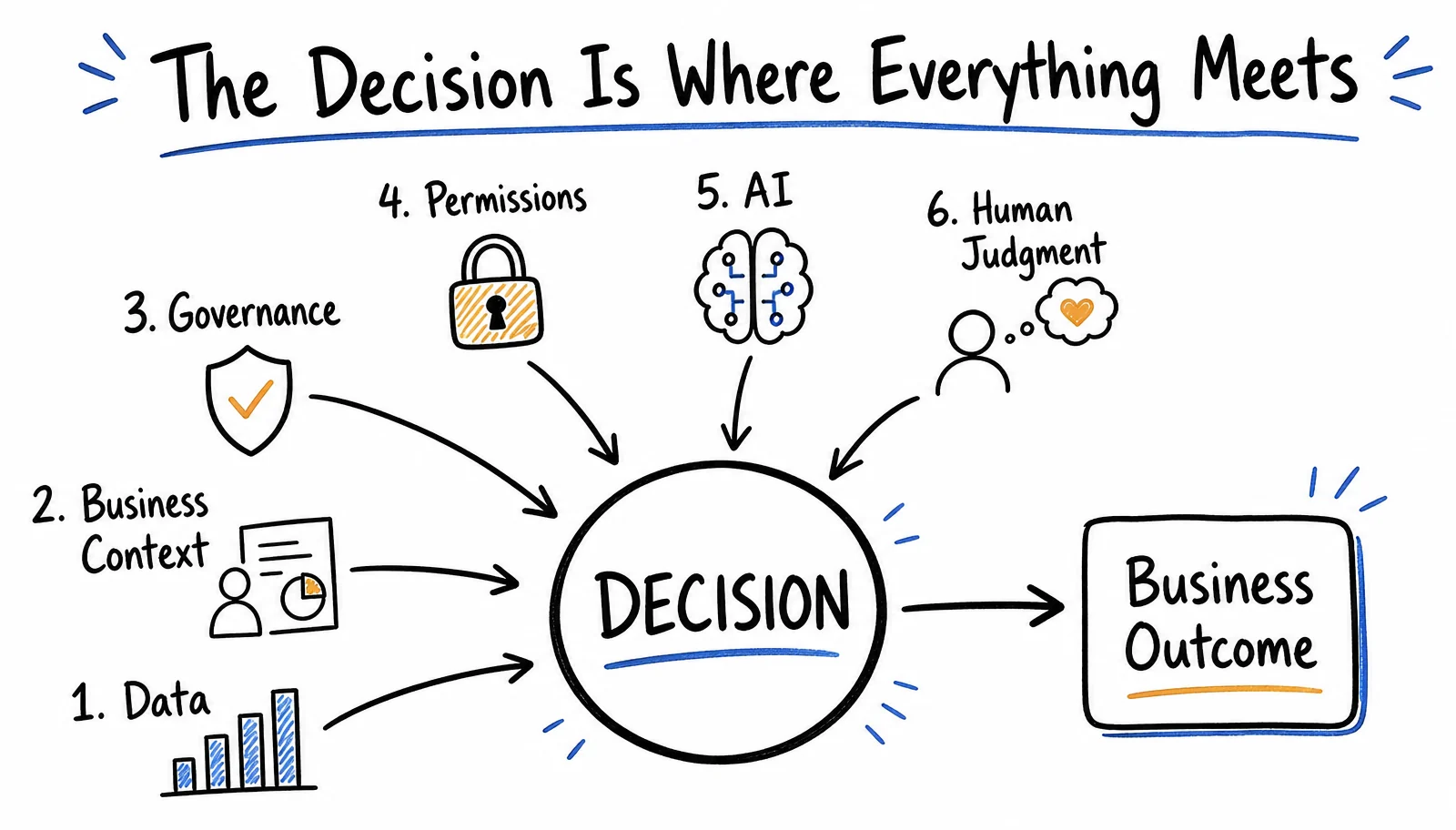
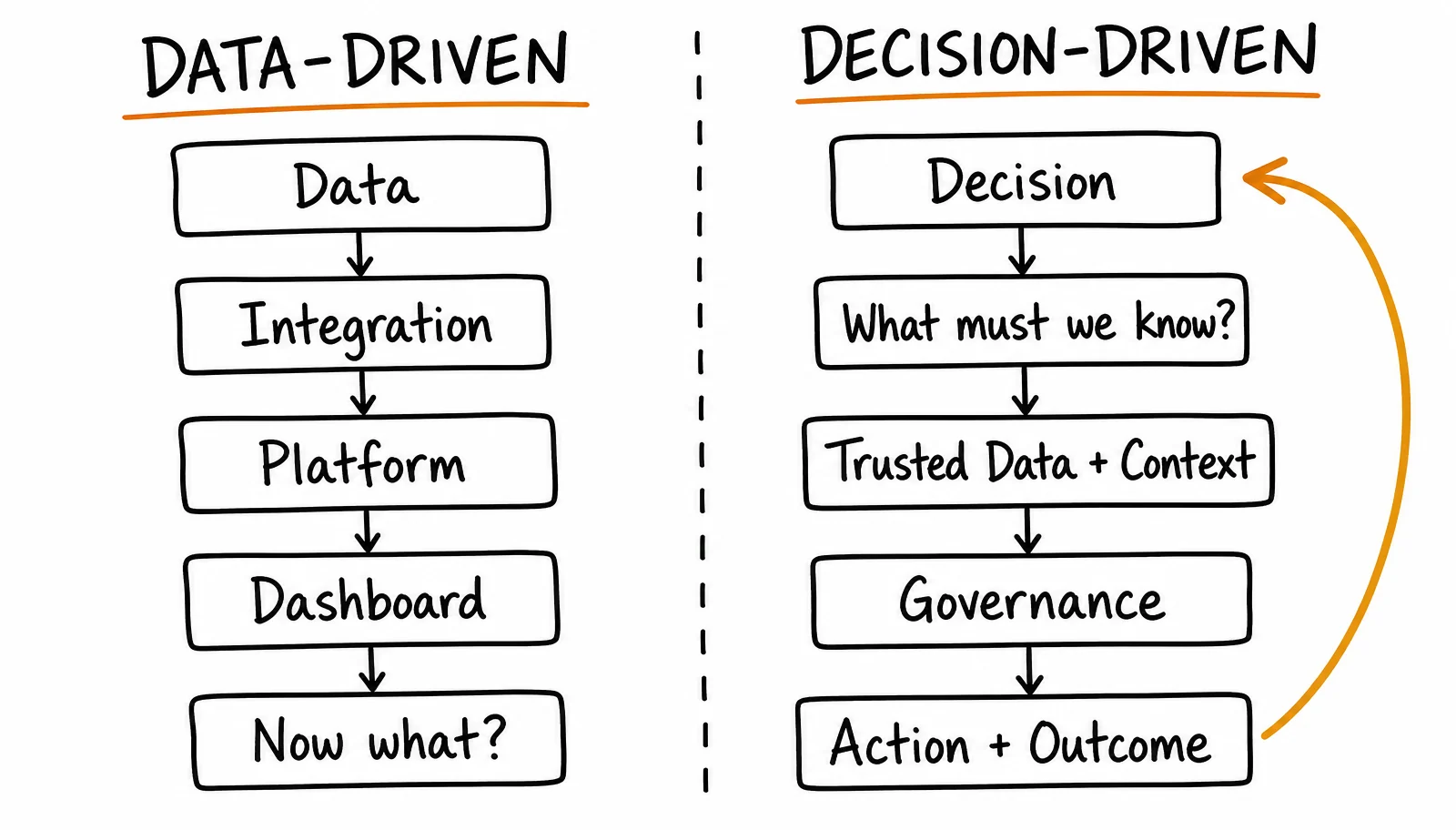
That is what starting with the decision changes. The conversation moves from “What data do we have?” to “What do we need to know?”
And those are not the same question.
Providing Access to Data Is Not the Same as Providing Access to Knowledge
An organization may already possess every dataset required to make the supplier decision. The difficulty is that the knowledge needed to interpret those datasets often exists somewhere else.
Experienced people understand things about a business that aren’t obvious from the underlying data. A procurement leader knows which supplier is difficult to replace. Someone in Operations recognizes that a change in delivery performance is unusual for a particular route. A quality team understands when a small shift in a measure deserves attention. People who have worked with the information for years know which definitions are trusted, which exceptions matter and when something that looks ordinary deserves a second look.
That understanding is part of the decision too.
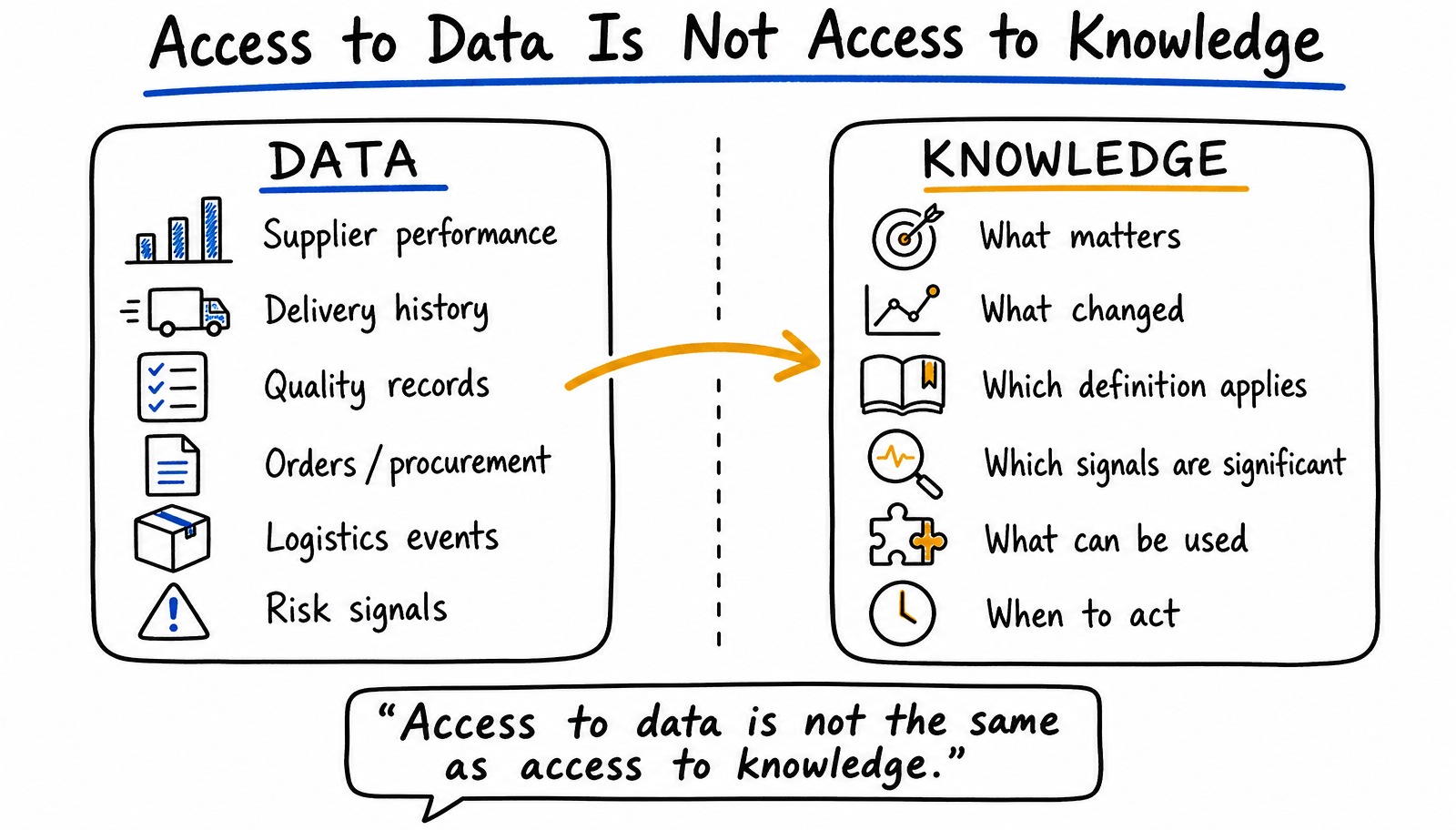
“Providing access to data is not the same as providing access to knowledge.”
This distinction becomes particularly important as AI moves into everyday business processes. An experienced employee carries a great deal of institutional knowledge in their head: which definition applies, which source is trusted, which exception matters, what a number actually means, what is sensitive, which policy applies and what they are permitted to do with the information. An AI agent cannot be assumed to know any of it. Giving that agent access to more enterprise data does not automatically give it the understanding people have accumulated through experience.
McKinsey makes a related point in its work on the foundations for agentic AI at scale, arguing that organizations need to share meaning, not simply data. Collibra has made a similar argument about AI needing organizational context rather than raw access. For AI to work effectively across an enterprise, the definitions, relationships and business understanding surrounding the information become as important as the information itself. That is a far more useful way to think about AI readiness than asking how much data an AI system can reach. The better question is whether it has enough trusted business knowledge to use that data appropriately.
Governance Becomes Part of Making the Decision Well
Once we know the decision we’re supporting and the information required to support it, governance becomes much more practical.
Bringing supplier, procurement, quality and logistics information together doesn’t mean everybody should suddenly be able to see everything. Some commercial information may be sensitive. Supplier financial-health information may have restrictions around its use. Different people may legitimately need different levels of detail. The business also needs to know where important information came from, what it means and who is responsible for it.
These aren’t governance requirements sitting around the outside of the business problem. They are part of making the information fit for its intended use.
This is what we mean at Data Tiles by Active Governance.
Organizations have already invested seriously in this area: governance platforms, catalogs, policies, ownership and stewardship, lineage, metadata, data quality, privacy, security, compliance and the teams who run all of it. Those foundations matter, and Active Governance is not an argument for replacing them. The frustration we hear is different. Governance has often been implemented as a discipline that sits alongside the practical work of building and using data, shaped understandably by compliance, risk, privacy, policy and documentation, while business and data teams continue assembling information for operational decisions somewhere else.
That is how a gap opens. An organization can have sophisticated governance foundations while business teams still reconcile information by hand, debate which measure applies, assemble a view from several systems, wait for a report to be built, or struggle to translate a policy into a specific AI use case. When people describe governance as passive, this is usually what they mean: not that the technology is inert, but that governance knowledge and policy remain separated from the point where information is being assembled, consumed and acted upon.
“The governance exists. The challenge is activating it where the work is happening.”
Cameron explores this shift in his Active Governance series, and it is something we see practically in our work with customers and partners. The goal is not another governance destination. It is to make the governance already established useful at the point where it matters, which is the decision. Governance needs to be able to influence how information is accessed, combined, consumed and acted upon, carrying the relevant policies, permissions, definitions, business context, ownership, provenance, sensitivity and controls with it. When somebody is permitted to use information, that experience should be straightforward. Where a control genuinely matters, it should apply when it matters.
The question has quietly changed as well. For years the governance question was “how do we govern our data?” It increasingly also needs to be “how does governance operate while that data is being used to make a decision?” and “how does it operate when an AI agent is participating in that decision?” For an experienced employee, missing context might result in a phone call to a colleague. An agent doesn’t necessarily have that safety net, which makes having the right knowledge and controls available with the information considerably more important.
So how do companies actually achieve this? Not with another enterprise-wide program. Take one decision, work backwards, and ask the questions that decide whether the answer can be trusted. What does the business need to know? What information is required, and what does it mean in this organization? Which definitions apply, which sources are trusted, and who owns them? Who should have access, what is sensitive, and which policies apply? Where did the information come from? What should a person be permitted to do with it, and what should an AI agent be permitted to do? Then build those answers into the data product itself. At that point governance is no longer sitting alongside the use case. It is part of building it.
From a Business Question to a Data Product
Let’s return to our supplier decision.
We know what we’re trying to understand. We’ve identified the information that contributes to the answer, the business knowledge needed to interpret it and the controls that should apply.
At this point, we’ve done valuable work. We shouldn’t have to reconstruct it every time somebody asks a related question.
This is where a data product becomes useful.
In the Latttice Supply Chain Industry Solution, the Supplier Risk & Performance Management use case brings supplier scorecards, on-time delivery history, quality records, financial-health signals, procurement information and logistics events together as a governed supplier intelligence data product.
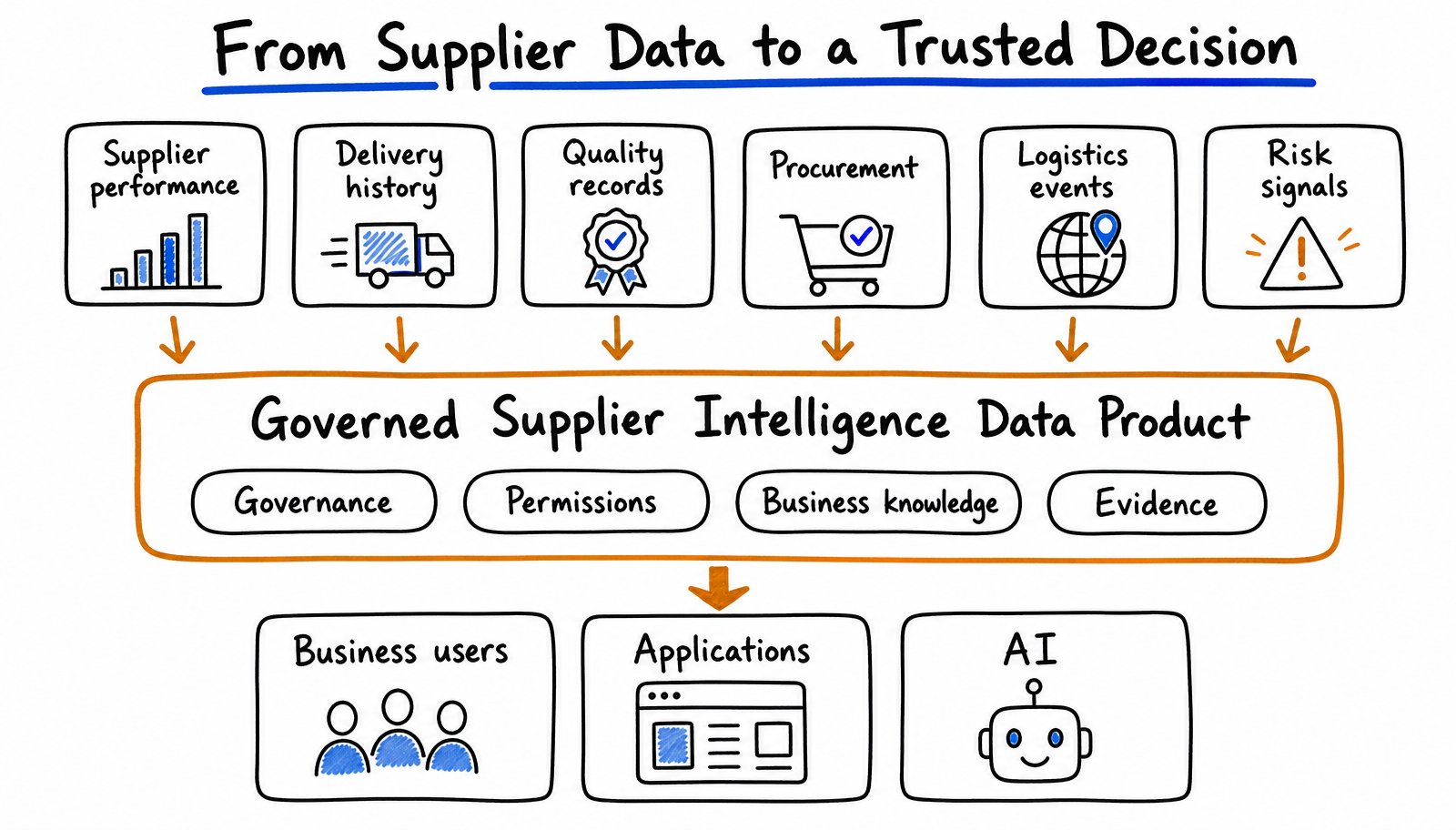
The important part isn’t how many sources have been connected. It is what the business can now understand that was difficult to see before.
Instead of waiting for a late shipment to become obvious, teams can examine which suppliers are showing increasing risk, which supplier issues are affecting orders and where changing delivery or quality signals may warrant attention.
The data product gives that understanding somewhere to live.
The definitions, context and governance established while creating it don’t disappear when the first question has been answered. They become part of something the organization can use again.
That is where the value begins to extend beyond the original use case.
Who Gets to Do the Work
There is another part of this that matters, and it comes up in almost every customer conversation: who gets to do the work.
Governance teams often hold enormous knowledge about policy, definitions, ownership, sensitivity, appropriate use and business terminology. Business teams understand the decision, the exceptions and the context behind the numbers. Data and technology teams understand the systems, the architecture and how the information is actually produced. Historically, turning all of that into something usable has often required requirements to travel between those groups before a technical team could build the result.
Latttice gives us another option. It is a zero-code, AI-powered Data Product Workbench, which means the people who understand the business problem and the governance around it can participate much more directly in creating the data product. That might be a business domain expert, a data product owner, a governance lead, a steward, an analyst or, in a Collibra environment, someone with the deep governance knowledge of a Collibra Ranger. They don’t have to become data engineers to put that knowledge to work.
I want to be careful here, because this is not an argument for removing engineering from the picture. Technical teams remain essential to the systems, the integration patterns and the harder problems underneath. The change is narrower and more practical: a business-led data product should not have to begin as a bespoke engineering project before the people who understand the decision can contribute what they know. Business knowledge, governance knowledge, trusted enterprise data and a clear business decision are what produce a trusted, governed data product, and Latttice brings those participants closer together around the product itself.
None of this means starting governance again. Organizations that have already invested in Collibra or other governance platforms have built valuable foundations: policies, definitions, ownership, lineage, metadata and business context. Latttice provides a practical way to put that investment to work in the business-led data products people actually use to make decisions.
Where that governance already exists, it can be reused in a Latttice data product and applied as the product is created and consumed. Where it does not, Latttice does not depend on a separate governance platform: governance is built into the data product itself, alongside the trusted data and business knowledge required for the decision.
The important difference is who can put that knowledge to work. With Latttice, a business expert, governance lead, data steward, Collibra Ranger or other domain expert does not need to be a data engineer to create a trusted, governed data product. They can work directly with the business decision, bring the relevant governance and context into the product, and make it available for people and AI to use appropriately.
This is what we mean by making governance active. The investment does not remain separate from the business outcome. It becomes part of how the decision is made.
For me, this is an important part of Active Governance. If governance is going to become part of the way a data product works, the people who understand that governance need a practical way to participate in creating it. That is also where Lenz fits: the data product carries the trusted information, business knowledge and governance, and Lenz lets AI agents work from that foundation where an agent is the right way to support the decision.
The Next Decision Doesn’t Have to Start From Zero
McKinsey’s work on scaling data products makes an important point about reuse. Data products become more valuable when they are designed to support multiple business needs rather than being rebuilt around every individual request.
You can see how that begins to happen in our supply-chain example.
Supplier lead-time information that helps us understand delivery risk may also contribute to an inventory decision. Inventory positions can become relevant when the business is forecasting demand. Supplier, quality and logistics information may appear again when the organization needs end-to-end traceability.
The decisions are different, so the data products supporting them should have a clear purpose of their own. But that doesn’t mean every new question needs to send the organization back to the beginning.
Our wider Supply Chain Industry Solution illustrates this across Supply Chain Visibility, Inventory Optimization, Demand Forecasting & Planning, Supplier Risk & Performance Management, and End-to-End Traceability & Compliance. Different business questions draw on overlapping parts of the supply chain, allowing trusted information and understanding to be reused rather than repeatedly reconstructed.
That matters because one of the hidden costs of enterprise data is how often people solve the same problem again.
A new report requires another reconciliation. A new team investigates which source to trust. Another project establishes what a measure means. A new AI use case starts by trying to understand the same underlying information.
The better outcome is that useful work leaves something behind.
Build on What You Already Have
This is also why starting with a decision can make change feel much more achievable.
Most established organizations already have significant investments across ERP, warehouse and operational systems, cloud platforms, supplier systems, catalogs, BI tools and governance technologies. Those investments contain data and capability the business relies on every day.
Making better decisions shouldn’t automatically require moving all of that somewhere else.
The information needed for our supplier decision can continue to live across the systems best suited to manage it. What needs to come together is the trusted view required for the business purpose, with the meaning and governance necessary to use it appropriately.
That principle is central to Latttice. It works across an organization’s existing data landscape so teams can create governed, business-led data products without first requiring another large migration or destination for all of their data.
For a business leader, that changes the scale of the starting point.
Instead of asking “How much of our data estate needs to be transformed before we can do this?”, the conversation can begin with “Which decision is worth improving first?”
One question creates a transformation program.
The other creates somewhere practical to start.
Would You Let an AI Agent Use It?
There is another useful test we can apply to the supplier data product we’ve created.
Would we be comfortable allowing an AI agent to use it?
Not because AI has to be part of every use case, but because the question exposes gaps very quickly.
The consumer of governed information is changing. For most of the past two decades it was predominantly a person, and a person can compensate for a missing definition with a phone call. Increasingly the consumer may also be an agent that retrieves information, combines it, reasons over it, produces a recommendation and sometimes takes an action. That raises the value of provenance, definitions, permissions, policy, business meaning, auditability and a clear boundary around what the agent is allowed to do.
If an agent identifies an emerging supplier risk, can we understand the information behind its recommendation? Does it have the business context required to interpret that information correctly? Are appropriate access controls in place? Do we know where the underlying information came from? Is it clear what the agent can do itself and where a person should remain involved?
NIST’s AI Risk Management Framework treats trustworthiness as something that needs to be considered throughout the way AI systems are designed, deployed, used and evaluated. Its Generative AI Profile extends that thinking into issues including provenance and ongoing monitoring.
Those ideas can sound substantial at an enterprise level. Around one real decision, they become much easier to work with.
If we discover that the agent doesn’t have enough context to interpret a supplier measure, we have found a specific problem to solve. If access needs tightening, we know why. If the business rule governing an action exists only in someone’s head, we have identified knowledge that needs to be made explicit.
We aren’t trying to make the whole enterprise AI-ready in one enormous exercise.
We’re making one worthwhile use case ready to be trusted.
Think Big, Start Small
None of this means the ambition has to be small.
The North Star might be an organization where trusted data products are reused across functions, where people spend far less time finding and reconciling information, and where governance works naturally as data is consumed. Over time, AI applications and agents may be able to participate in increasingly valuable decisions because they are working from business knowledge the organization already understands and trusts.
Starting with one supplier decision doesn’t diminish that ambition.
It creates a route toward it.
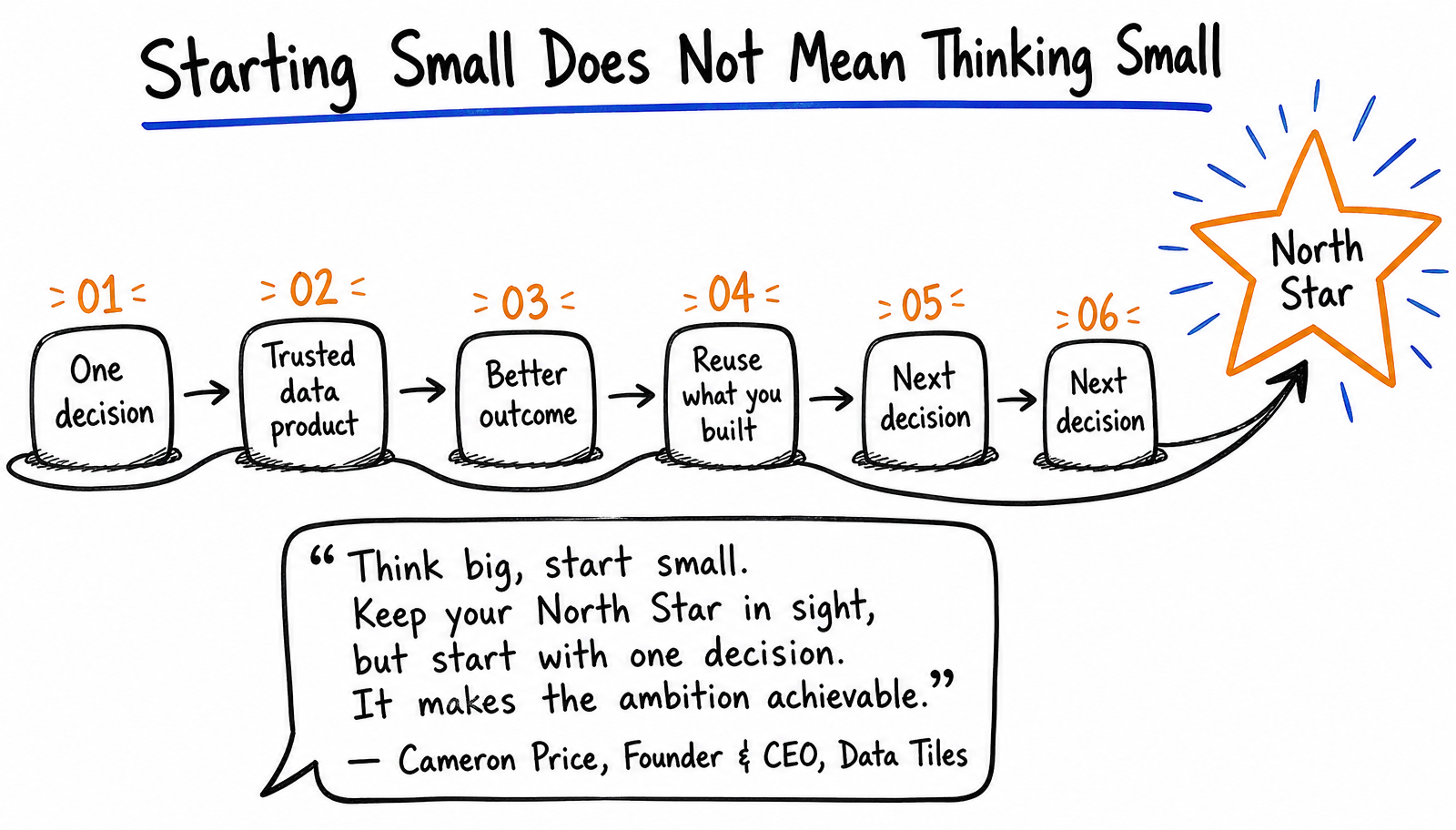
The first result could be earlier identification of supplier risk, less time spent reconciling conflicting information and greater confidence about where intervention is needed. The bigger value comes from what follows. The trusted work created for that decision can contribute to another data product, support another team or provide part of the foundation for an AI use case without everyone having to start again.
The second decision doesn’t begin from zero, and neither does the third.
Over time, the North Star starts becoming less about where the organization hopes to get to and more about how the organization actually works.
Making Governance Useful
What I like about looking at Active Governance through a real business decision is that governance stops being the subject of the conversation. The decision is the subject, and governance is one of the things that allows us to make it well.
It helps people work confidently with information they understand. It preserves important business knowledge rather than leaving it scattered across systems and people’s experience. It makes trusted work reusable. And it provides a stronger foundation when AI begins consuming that information or participating in the decision.
Cameron’s Active Governance series explores the wider shift behind all of this: from governance that helps us know about data toward governance that can operate as data is actually used. Working with customers and partners, I think the most achievable way to begin is much smaller.
Start with a decision. Work backwards to what needs to be known. Bring together the trusted information and business knowledge required to answer it. Bring the people who understand the business, the governance and the data closer to the build. Make governance part of the data product. See whether the decision gets better. Then reuse what you have built and move to the next one.
We began with one question: which suppliers are most likely to create late shipments, what could those delays affect, and where should we intervene first? That decision gave the data a purpose. It showed us which knowledge mattered, where governance needed to apply and what was worth making reusable.
Think big, start small. Keep your North Star in sight.
And make one decision better.
Join a Data Conversation,
Lili Marsh
Head of Partner & Customer Success, Data Tiles
Explore how these supply chain decisions become trusted, governed data products in Latttice — from visibility and forecasting to supplier risk and traceability.
Supply chain visibility
See how fragmented ERP, WMS, supplier and logistics information becomes a unified, governed operational view.
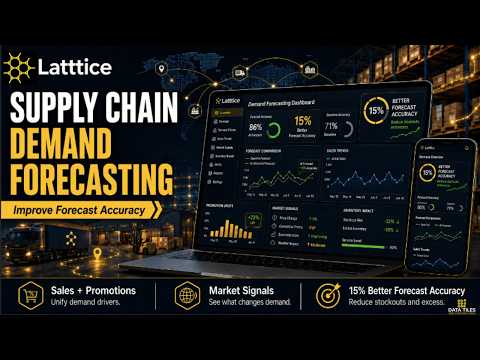
Demand forecasting
See how connected demand, sales and inventory signals support better forecasting and reduce excess stock.
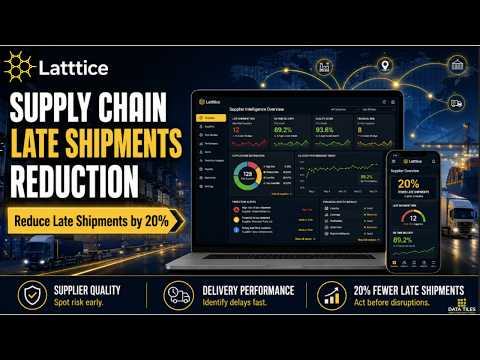
Late shipments and supplier risk
See how supplier performance, quality, delivery and financial-health information helps teams identify risk and act before delays escalate.
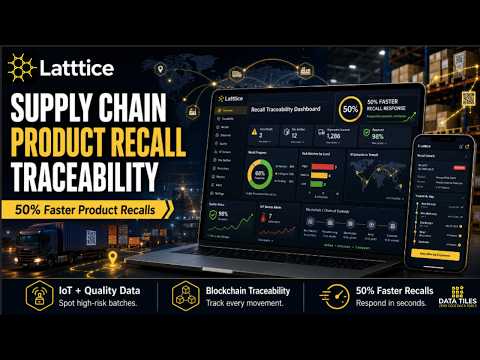
Traceability and faster recalls
See how traceability, quality and movement information helps teams identify affected batches and respond faster.
These are some of the decisions explored in the Latttice Supply Chain Industry Solution. See how trusted data products can support visibility, inventory optimization, forecasting, supplier risk and traceability across the supply chain.
Explore the complete Supply Chain Industry SolutionLili works with customers and partners across industries to help organizations turn trusted data into something the business can use. Her focus is practical adoption, bringing business and data teams together around real needs and helping partners create repeatable approaches that lead to measurable outcomes.
At Data Tiles, we see trusted data products as a practical bridge between the data investments organizations already have and the decisions they want people and AI to make. Latttice enables teams to create, govern and reuse those products across their existing data landscape, while Lenz enables AI agents to work from the trusted business knowledge those products provide.
References
The following research and publications informed the thinking behind this article and provide additional perspective on decision governance, Active Governance and trusted data products.
- Gartner. “Gartner Identifies the Top Trends for Data and Analytics.” 16 June 2026. Available at: Gartner Identifies the Top Trends for Data and Analytics
- Gartner. “Signature Series: Top Trends in Data and Analytics for 2026.” Gartner Data & Analytics Summit, Sydney.
- McKinsey & Company. “Building the foundations for agentic AI at scale.” Available at: mckinsey.com
- McKinsey & Company. “The missing data link: Five practical lessons to scale your data products.” Available at: mckinsey.com
- National Institute of Standards and Technology. “Artificial Intelligence Risk Management Framework (AI RMF).” Available at: nist.gov
- National Institute of Standards and Technology. “Artificial Intelligence Risk Management Framework: Generative Artificial Intelligence Profile.” Available at: nist.gov
- Collibra. “AI needs context: Why data alone is not enough.” Available at: collibra.com
- Cameron Price, Data Tiles. Active Data Governance — Part 1
- Cameron Price, Data Tiles. Active Data Governance — Part 2
- Cameron Price, Data Tiles. Active Data Governance — Part 3: From Knowing Data Exists to Using It
- Cameron Price, Data Tiles. From Data-Driven to Decision-Driven: Why Data Products Are Becoming the New Operating Model for Data
Cameron Price’s three-part series traces how governance moves from knowing what data you have to actively shaping how it is used. AI raises the stakes: models act on whatever context they are given, so trust has to travel with the data itself. Governed data products are how that context is packaged, meaning ownership, quality and policy attached at the point of decision, not documented somewhere else. Read the parts in order, or start with the synthesis.
- Part 1From Knowing to UsingRead
- Part 2What Active MeansRead
- Part 3Governance in the MomentRead
- SynthesisStarts With the DecisionYou are here
People also ask
How AI-ready is your organization, really?
Take the Data Tiles AI Readiness Assessment. A short, structured diagnostic that shows where your data, governance and decision-making are strong, and where trusted AI will stall.
Take the AI Readiness AssessmentStart a conversation about
trusted data products.
If your organization is working to activate trusted data and responsible AI, we’d welcome a conversation about where you are now, what is blocking progress, and how Latttice and Lenz could help.
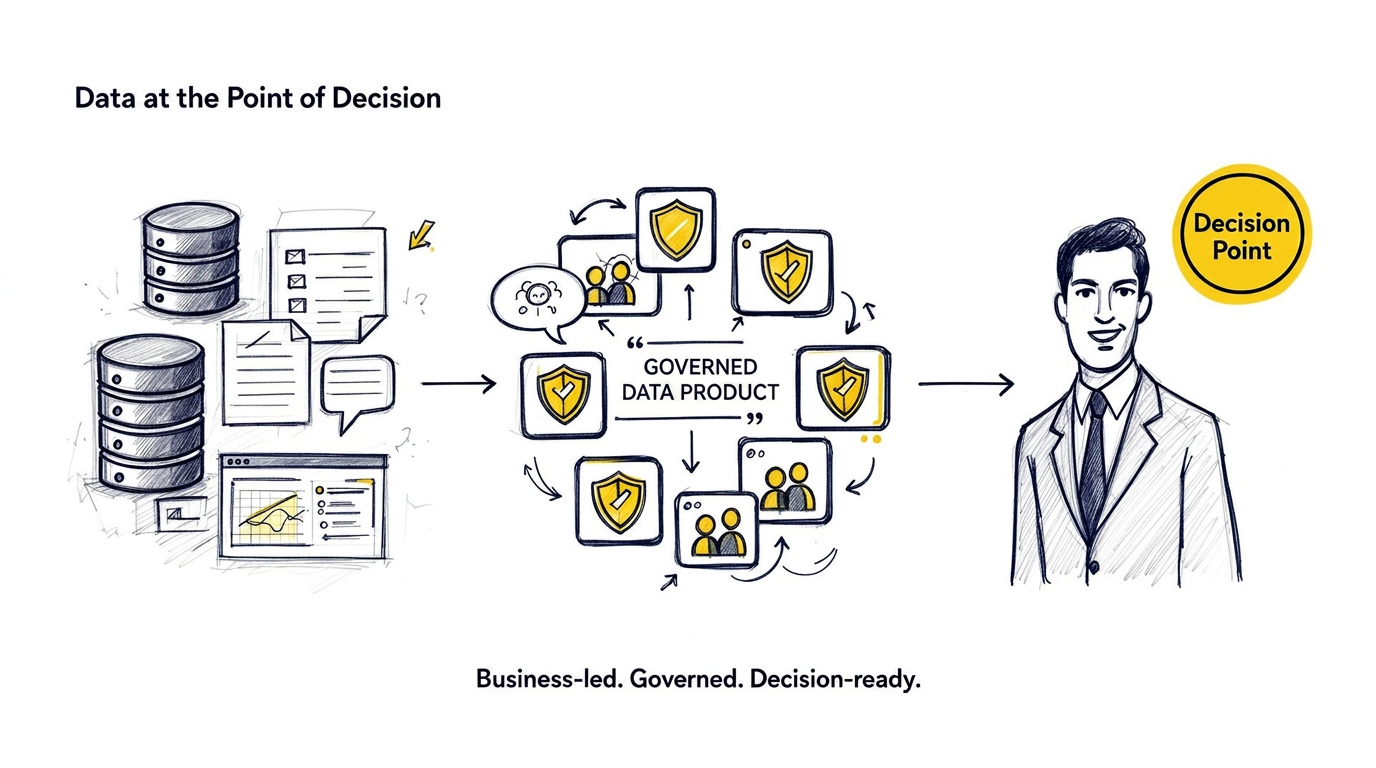
From Data-Driven to Decision-Driven: Why Data Products Are Becoming the New Operating Model for Data
Read article
Active Data Governance Part 3: From Knowing Data Exists to Using It
Read article
AI Readiness Starts With the People Trying to Make Better Decisions