AI Readiness Starts with People Trying to Make Better Decisions
Why trusted, governed data products—not AI models—enable better decisions and enterprise AI.

Readiness Is Experienced at the Point of Decision
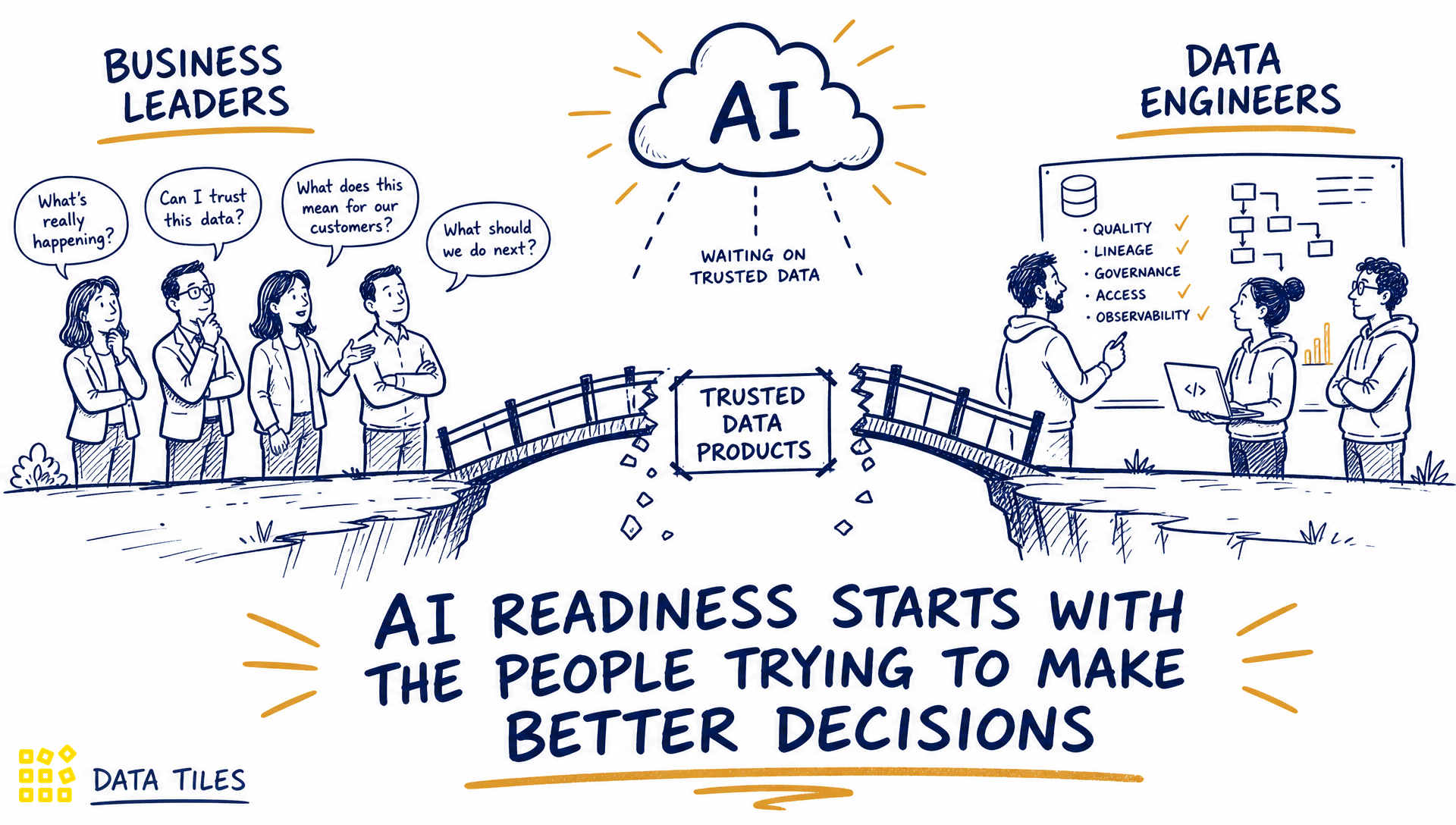
Every conversation about enterprise AI eventually arrives at the same place. Not the model, not the ambition, but whether the organization has trusted, governed, business-ready data products behind the decisions people are trying to make.
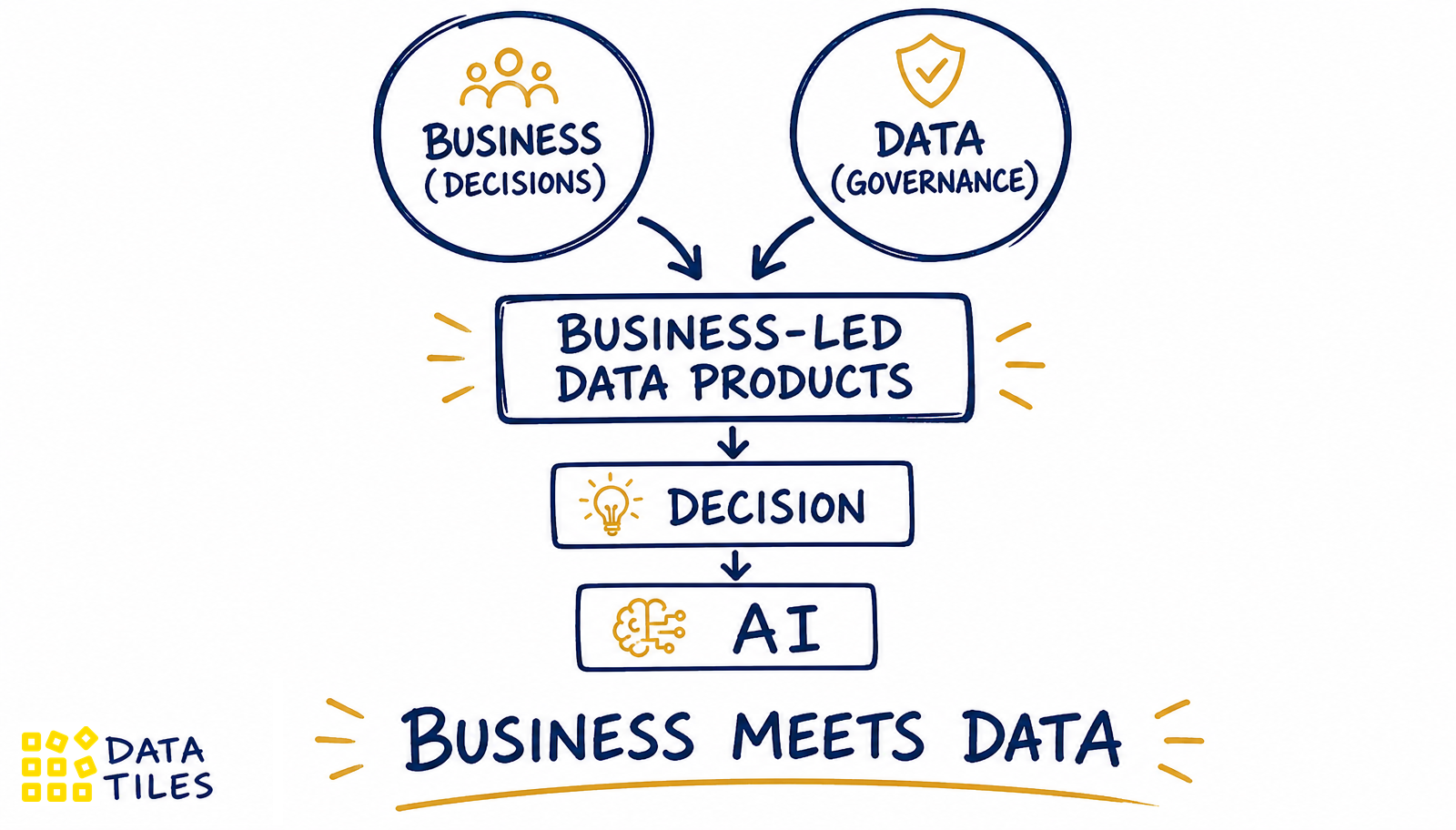
Business leaders need trusted data at the point of decision. Data teams need clarity on why that data is needed, how it will be used and which rules must apply. When those two perspectives are disconnected, AI does not close the gap. It scales it.
This article looks at what customers and partners are asking for in practice: a shared operating model where the business defines the decision, the data team understands the need, governance is applied at the right point, and readiness becomes measurable at the level of the individual data product.
The Same Question, From Both Sides
Every customer conversation about AI eventually comes back to the same issue.
It is rarely the model. It is rarely the ambition. It is rarely a lack of ideas. The harder question is whether the organization has trusted, governed, business-ready data products that can support the decisions people are trying to make.
This is what I hear from customers and partners all the time. Business leaders are under pressure to move faster, make better decisions, and show measurable value from AI. Data teams are under pressure to support those ambitions while also keeping the operational foundations running. They are managing pipelines, infrastructure, governance, access, security, reporting, urgent requests, and the day-to-day reality of keeping business technology working.
Both sides are trying to solve the same problem, but they are often approaching it from different places.
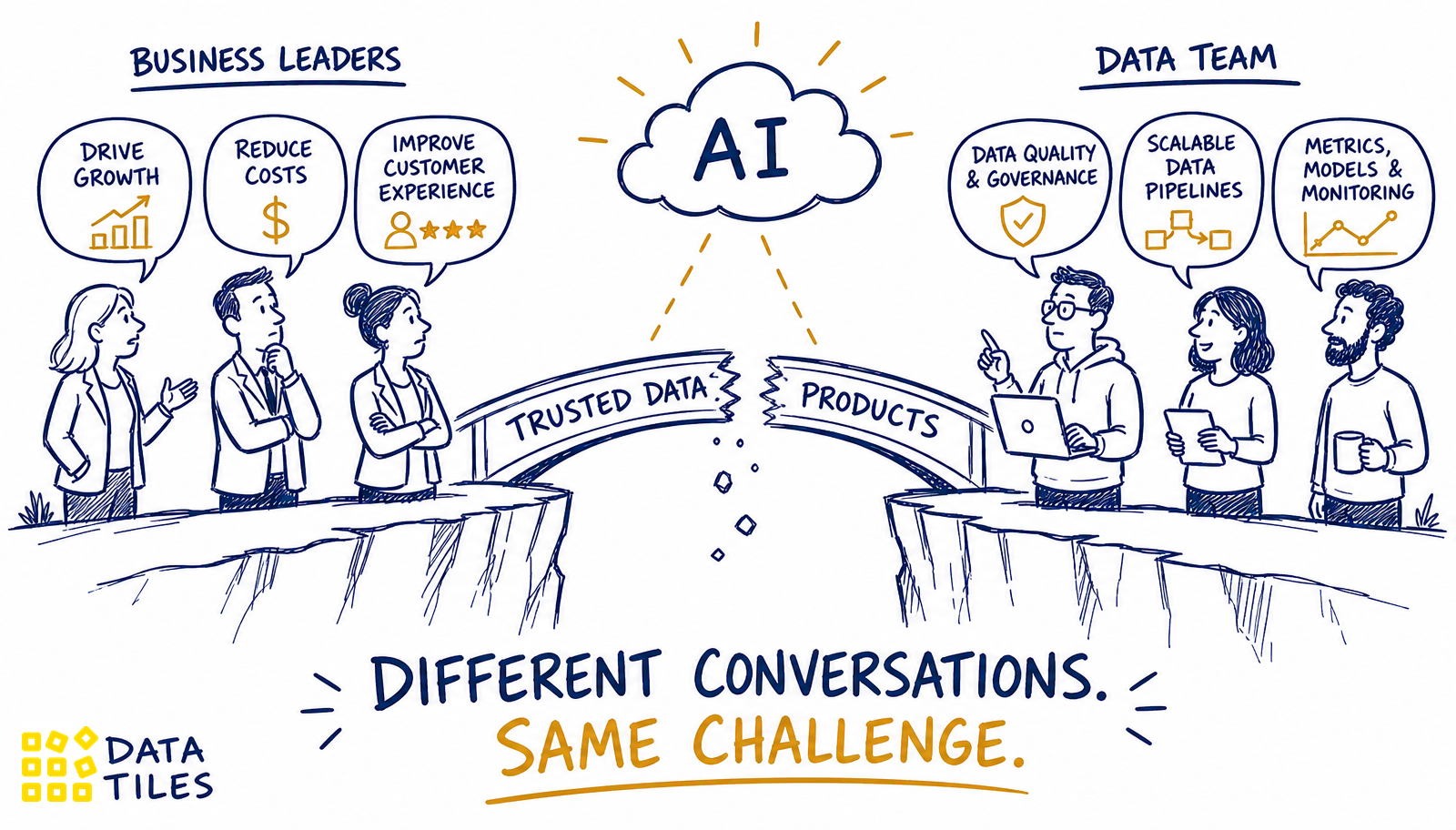
Business leaders need trusted data at the point of decision. Data teams need clarity on why that data is needed, how it will be used, what outcome it supports, and which rules must apply. When those two perspectives are disconnected, the result is frustration on both sides. The business feels like data is too slow. The data team feels like the business keeps asking for outputs without enough context. The organization then starts layering AI on top of the same disconnect.
That is where the risk begins.
AI Does Not Remove the Need for Trust
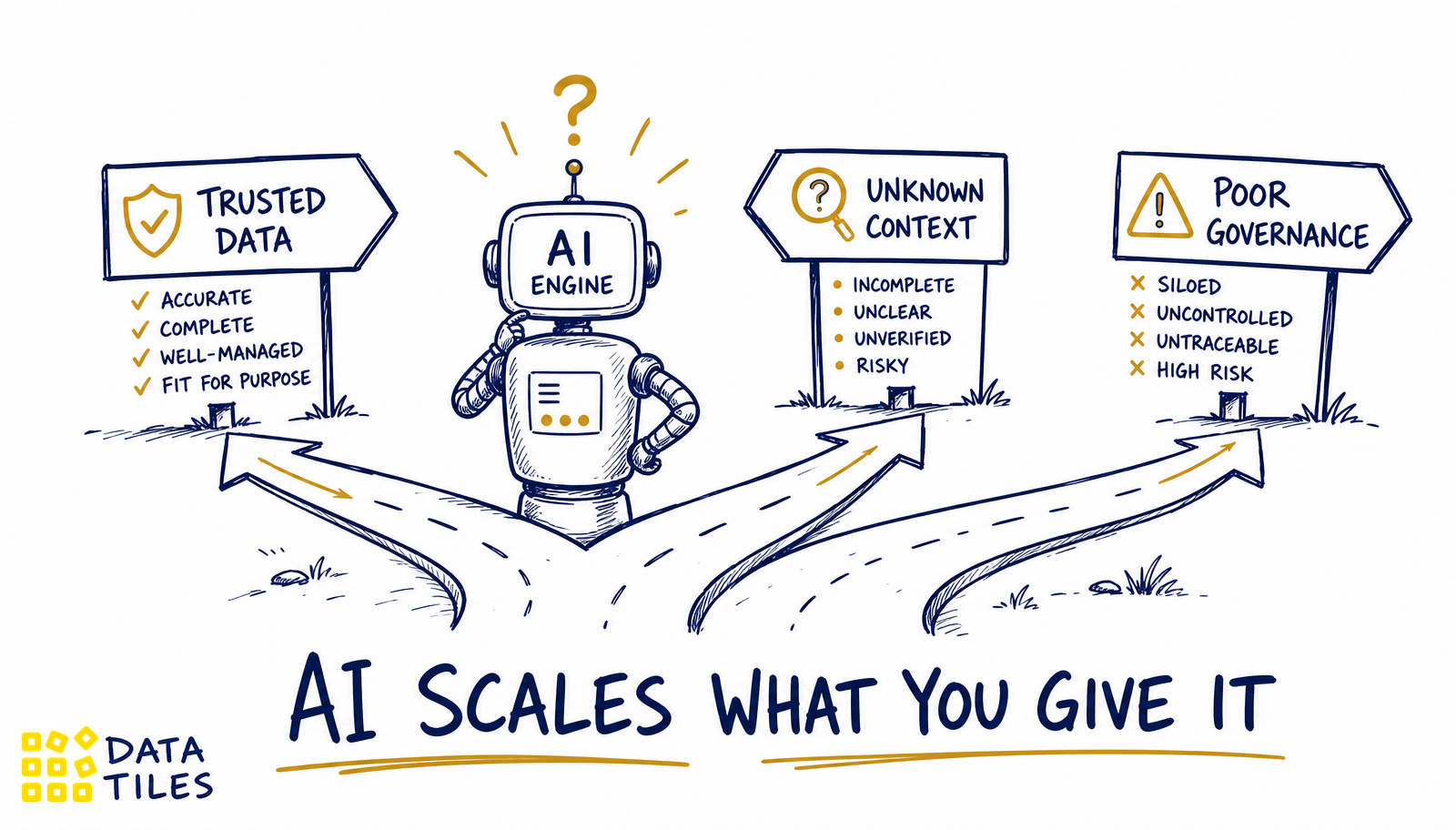
AI does not remove the need for trust, context, governance, ownership, and explainability. It increases the importance of all of them. Gartner has warned that weak semantic foundations can make AI agents inaccurate and inefficient, exposing organizations to wasted spend and data and AI governance vulnerabilities. The point is clear. AI agents need context to operate accurately. Without that context, they do not become smarter. They become more expensive and harder to control. (Gartner)
AI doesn't remove the need for trust. It increases the importance of it.
This is why Cameron Price’s vision for the decision-driven enterprise matters so much. The goal is not to make organizations more impressed by data. It is to help them make better decisions with data they can trust. That sounds simple, but it requires a very different operating model. It requires business leaders and data teams to work from the same understanding of what matters, which data products are needed, who owns them, how they are governed, and how they will be consumed by people, applications, agents, and AI systems.
Readiness Is Experienced at the Point of Use
That vision has shaped how we think at Data Tiles and how Latttice has been designed.
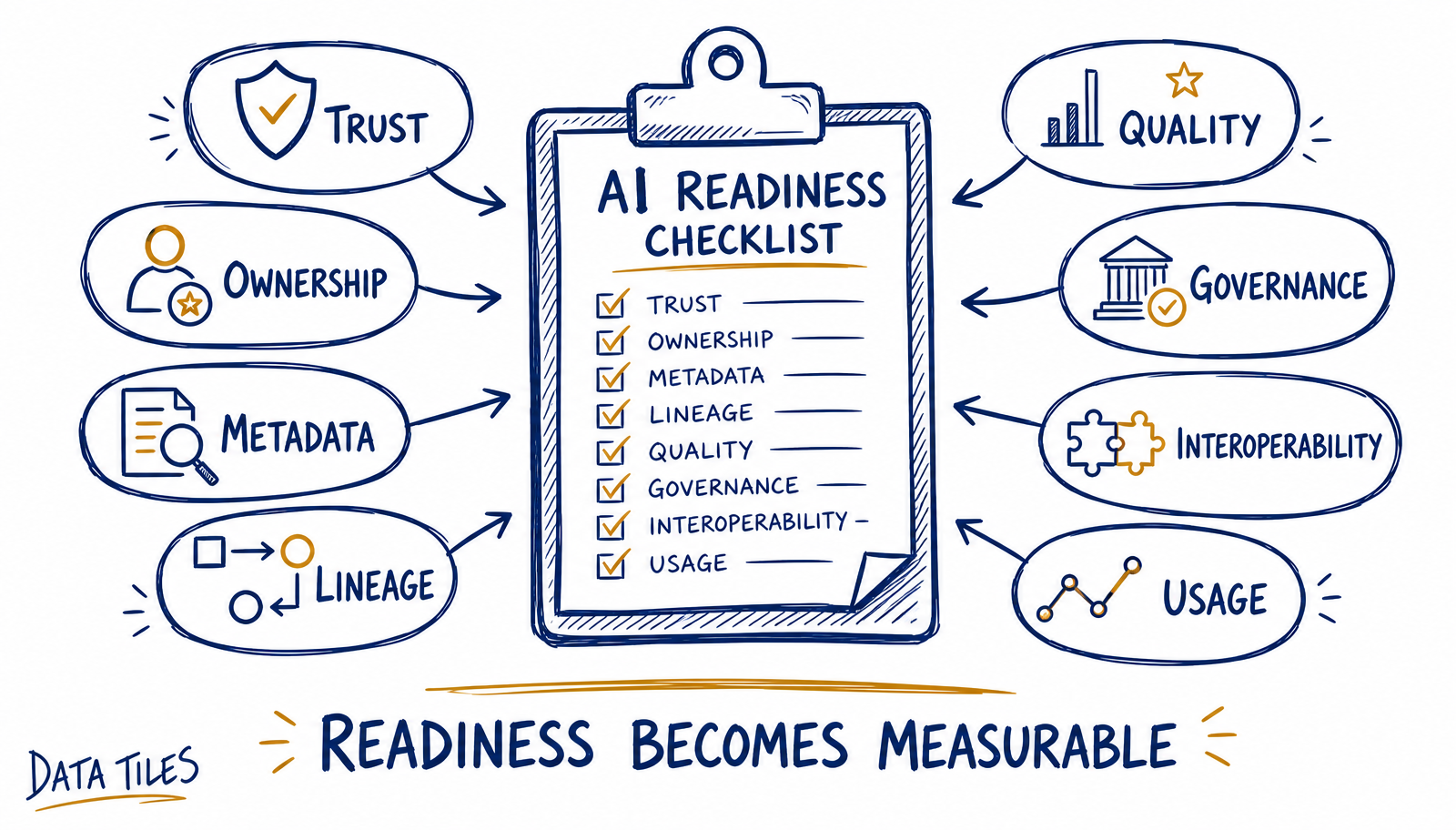
Latttice is not simply a place to create data products. It operationalizes what makes a data product usable, trusted, governed, explainable, and ready for consumption. The eight categories and thirty-seven metrics built into the Latttice operating model reflect the characteristics we see repeatedly in successful business-led data products. They help teams move beyond vague statements like “we need better data” or “we need to be AI ready” and toward a more practical question: is this specific data product ready to support the decision, workflow, agent, or model it is being created for?
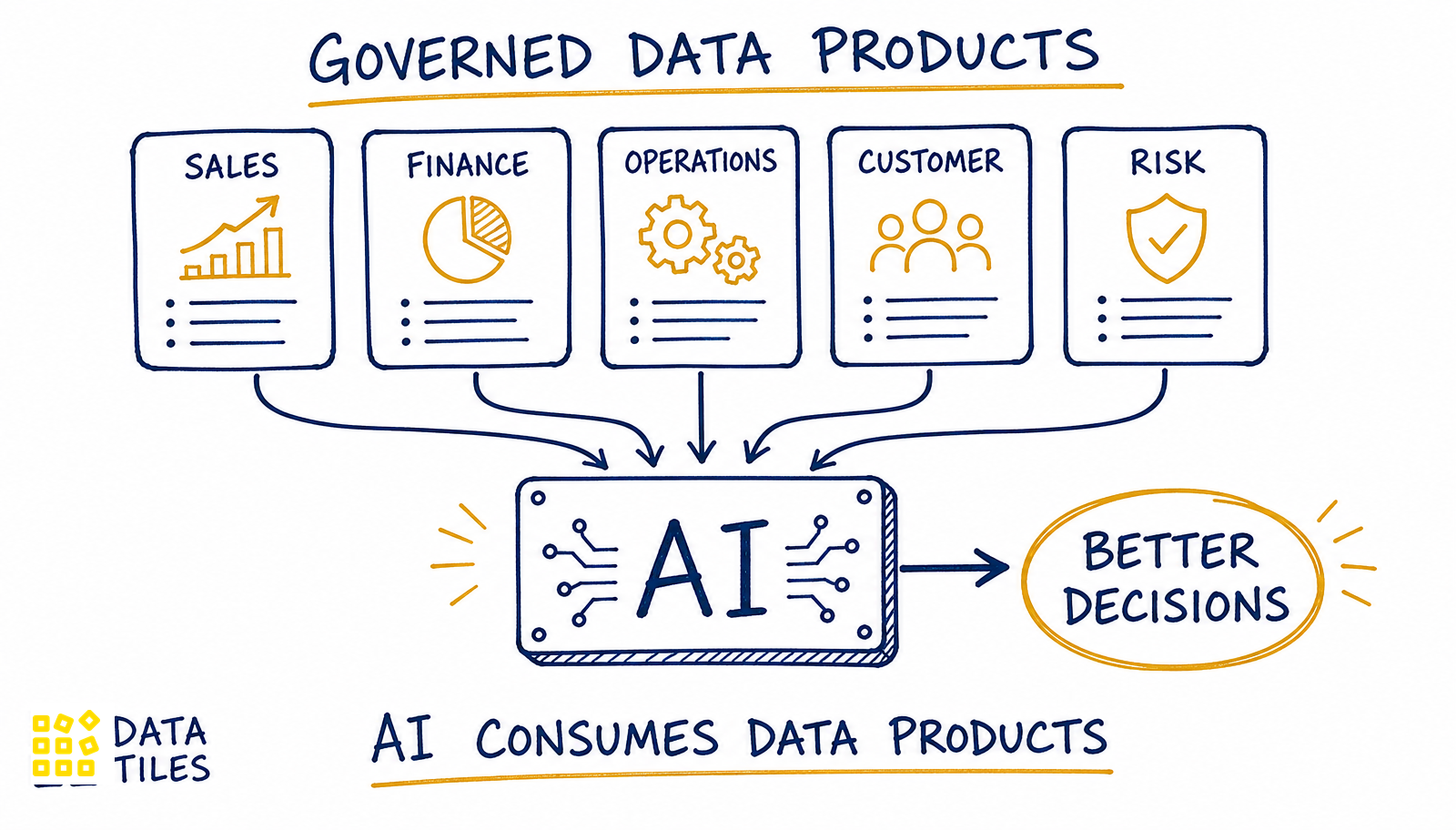
That distinction matters because AI readiness is often discussed as though it is an enterprise-wide status. In practice, readiness is experienced at the point of use. A business user does not consume an enterprise AI strategy. They consume a recommendation, a response, a workflow, or a decision support experience. An AI agent does not consume a transformation roadmap. It consumes data products. If those data products are poorly described, weakly governed, incomplete, misaligned to business meaning, or disconnected from usage signals, the experience will break down.
AI agents don't consume transformation roadmaps. They consume data products.
Capability Maturity, Not Just Tooling
Forrester has made a similar point in its work on AI readiness, arguing that organizations need to move beyond hype and focus on the maturity of the capabilities required to deploy AI safely and profitably at scale. That includes trust, governance, data quality, architecture, and operational discipline. For customers, this reinforces what many already feel. AI success is not just about choosing tools. It is about whether the organization has the capabilities to use them responsibly and effectively. (Forrester)
This is also why partners are so important.
Why Partners Matter
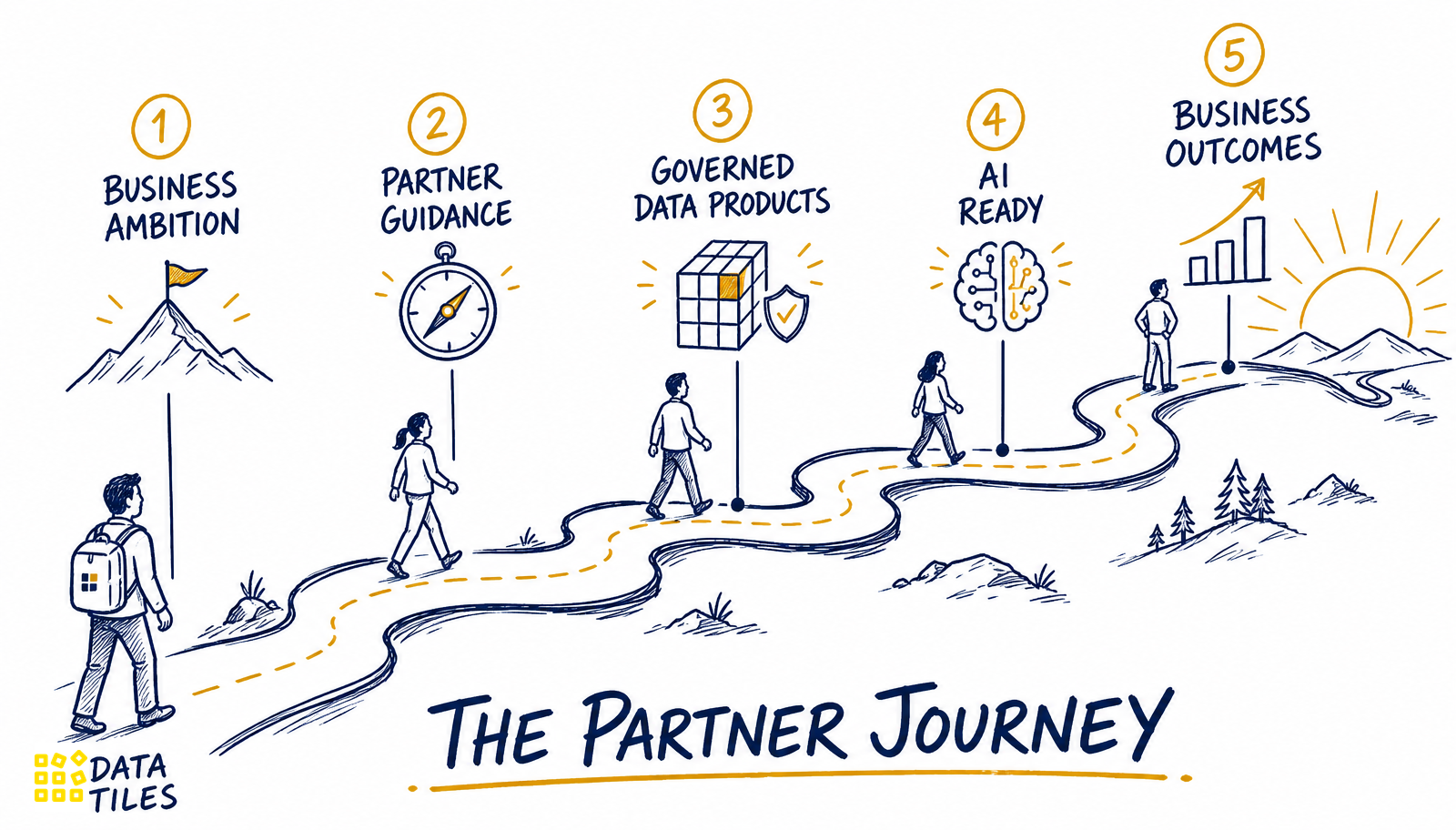
Partners are increasingly being asked by their customers to help make AI real. Not in a theoretical way, and not through another high-level strategy deck, but through practical change. Customers want to know which data products they can trust, which ones are ready for AI, which ones need improvement, and how to align business requirements with governed delivery. Partners are being asked to provide the pathway from ambition to execution.
Latttice gives partners a way to do that.
With Latttice, partners can help customers operationalize business-led data products using a repeatable model. They can work with business teams to define the decision or outcome, help data teams understand the required context, and use the Latttice readiness categories and metrics to identify what must be true before that data product can safely support AI or decision workflows. This creates a more practical engagement model for partners because it connects advisory, implementation, governance, and adoption into one clear pathway.
It also creates a better experience for customers.
Instead of asking data teams to respond to endless disconnected requests, Latttice gives them the business context they need. Instead of asking business leaders to wait for technical interpretation, it gives them a clearer way to express what they need from data. Instead of treating governance as something that slows the process down, it makes governance part of the way trusted data products are created and consumed.
This is the ecosystem of decision-driven change that we believe is needed.
McKinsey’s research into organizations capturing value from AI points to the importance of rewiring how organizations work across strategy, operating model, technology, data, adoption, and scaling. In other words, AI value is not created by a model in isolation. It is created when the organization changes how work gets done. That is exactly why business ownership, partner enablement, trusted data products, and operational governance need to come together. (McKinsey & Company)
From a customer and partner perspective, this is where Latttice becomes powerful. It gives everyone a shared operating model. The business can define the decision. The data team can understand the need. Governance can be applied at the right point. Partners can guide the change. AI can consume data products that are more complete, more understandable, more explainable, and more trusted.
That does not happen by accident.
It requires deliberate design.
The thirty-seven metrics inside Latttice are important because they make readiness visible. They help teams understand whether a data product has the metadata, descriptions, ownership, policies, lineage, interoperability, and trust signals required to support real use. These are not abstract ideas. DAMA International has long positioned data governance, data quality, metadata, stewardship, and lifecycle management as essential disciplines for managing data as a trusted organizational asset. Latttice brings those principles closer to the point where data products are created, governed, activated, and used. (DAMA International®)
Where This Is Heading
The future of AI will not be decided only by who has the most advanced models. It will be decided by which organizations can connect trusted data products to better decisions, and which partners can help them operationalize that change at scale.
That is the direction we are heading in at Data Tiles.
Cameron set the vision for the decision-driven enterprise. Latttice operationalizes that vision through business-led, governed, measurable data products. Our customers need this because they are being asked to deliver trusted AI outcomes, not just AI experiments. Our partners need this because they are being asked to help customers move from ambition to action. And the data community needs this because the old divide between business demand and data delivery is no longer sustainable.
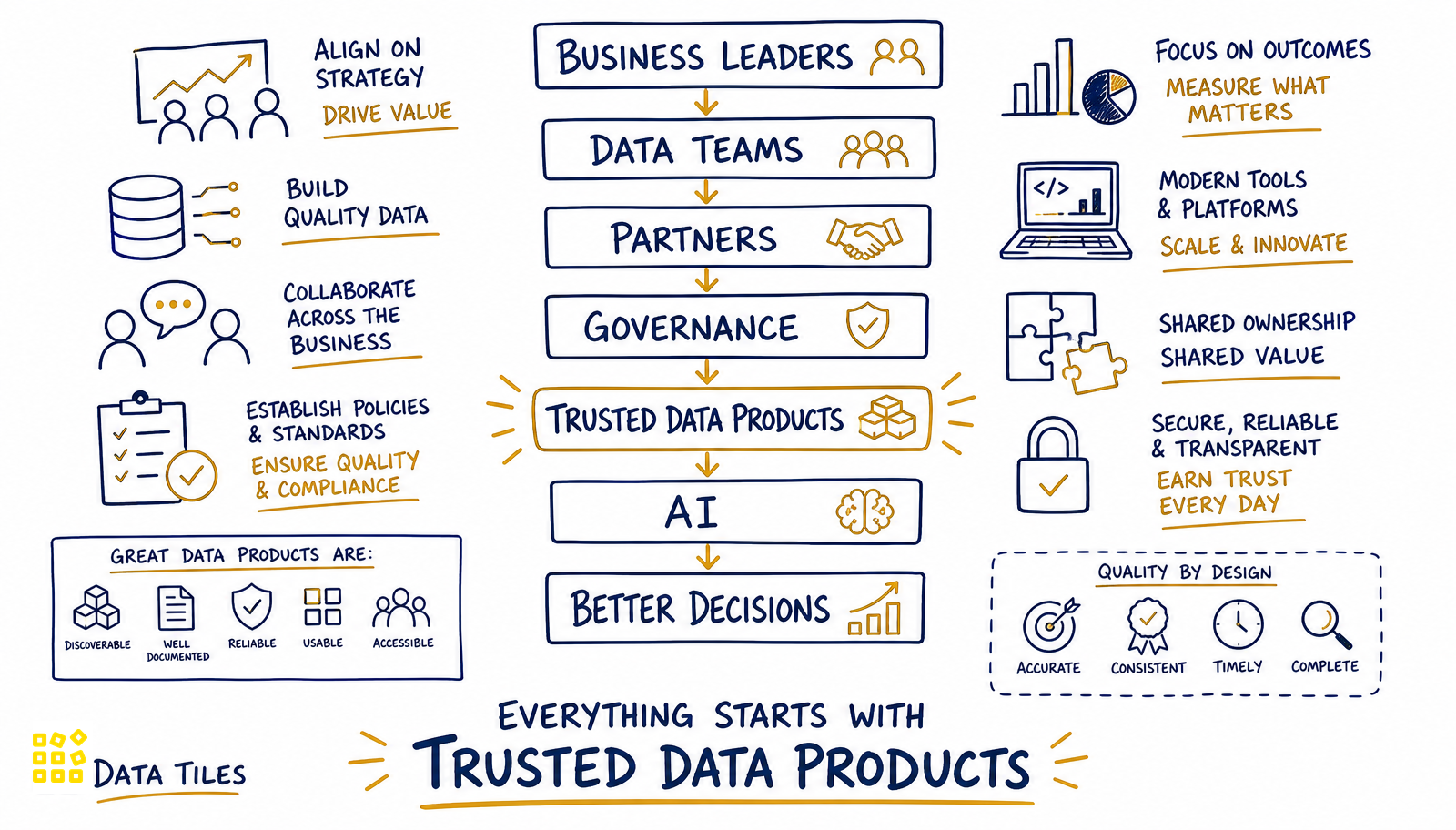
Trusted Data Products Start With People
AI readiness starts with trusted data products.
AI readiness starts with trusted data products.
But trusted data products start with people.
They start with business leaders who can clearly define the decisions they need to improve. They start with data teams who understand the outcome their work is supporting. They start with partners who can help both sides move together. And they start with an operating model that makes trust, governance, context, and usage measurable.
That is what Latttice was designed to enable.
Not just more data.
Not just more AI.
Better decisions.
Join a Data Conversation,
Lili Marsh
Lili works with customers and partners across industries to help organizations operationalize trusted, business-led data products for decision-making and AI. Her focus is enabling practical adoption, stronger collaboration between business and data teams, and helping partners deliver measurable customer outcomes through repeatable operating models.
At Data Tiles, we see the same challenge from both sides. Customers need trusted, business-ready data products that can support AI and decision-making with confidence. Partners are being asked to help deliver that capability in a practical, repeatable way. Latttice brings those worlds together by giving business teams, data teams, and partners a shared way to create, govern, measure, and activate data products that are ready for real use.
References
The following reports and publications informed the thinking behind this article and provide additional insights into enterprise AI readiness, governance and trusted data products.
- DAMA International. DAMA-DMBOK®: Data Management Body of Knowledge (2nd Edition). Technics Publications, 2017.
- DAMA International. “What Is Data Management?” Available at: DAMA International – What Is Data Management?
- Forrester. “The CIO’s Guide to AI Readiness.” Forrester Blogs, 26 January 2026. Available at: The CIO’s Guide to AI Readiness (Forrester)
- Gartner. “Gartner Says Lack of Semantics Causes Inaccurate AI Agents and Wasted Spending.” Gartner Newsroom, 11 May 2026. Available at: Gartner Newsroom – Lack of Semantics Causes Inaccurate AI Agents and Wasted Spending
- McKinsey & Company. “The State of AI: Global Survey 2025.” QuantumBlack, AI by McKinsey, 5 November 2025. Available at: The State of AI: Global Survey 2025
People also ask
Explore the connected concepts that anchor the Decision-Driven Enterprise.
How AI-ready is your organization, really?
Take the Data Tiles AI Readiness Assessment. A short, structured diagnostic that shows where your data, governance and decision-making are strong, and where trusted AI will stall.
Take the AI Readiness AssessmentStart a conversation about
trusted data products.
If your organization is working to activate trusted data and responsible AI, we’d welcome a conversation about where you are now, what is blocking progress, and how Latttice and Lenz could help.