Data Tiles
Part of the Trusted Data Product Framework

How to Build Trusted Data Products

Industrialize the build of business-owned data products that earn trust and scale.

DATA TILES GUIDE·8 min read·For CDO, Data Leader, Architect·Trusted Data Products
Why this matters

Data sets multiply. Trusted, owned, reusable products do not. Without a repeatable build pattern, every team rebuilds and governance can never catch up.

The challenge
  • · Data products are launched as projects, not operated as products.
  • · Quality, lineage and meaning are bolted on after the fact.
  • · Ownership defaults to platform teams that cannot speak to business meaning.
What good looks like
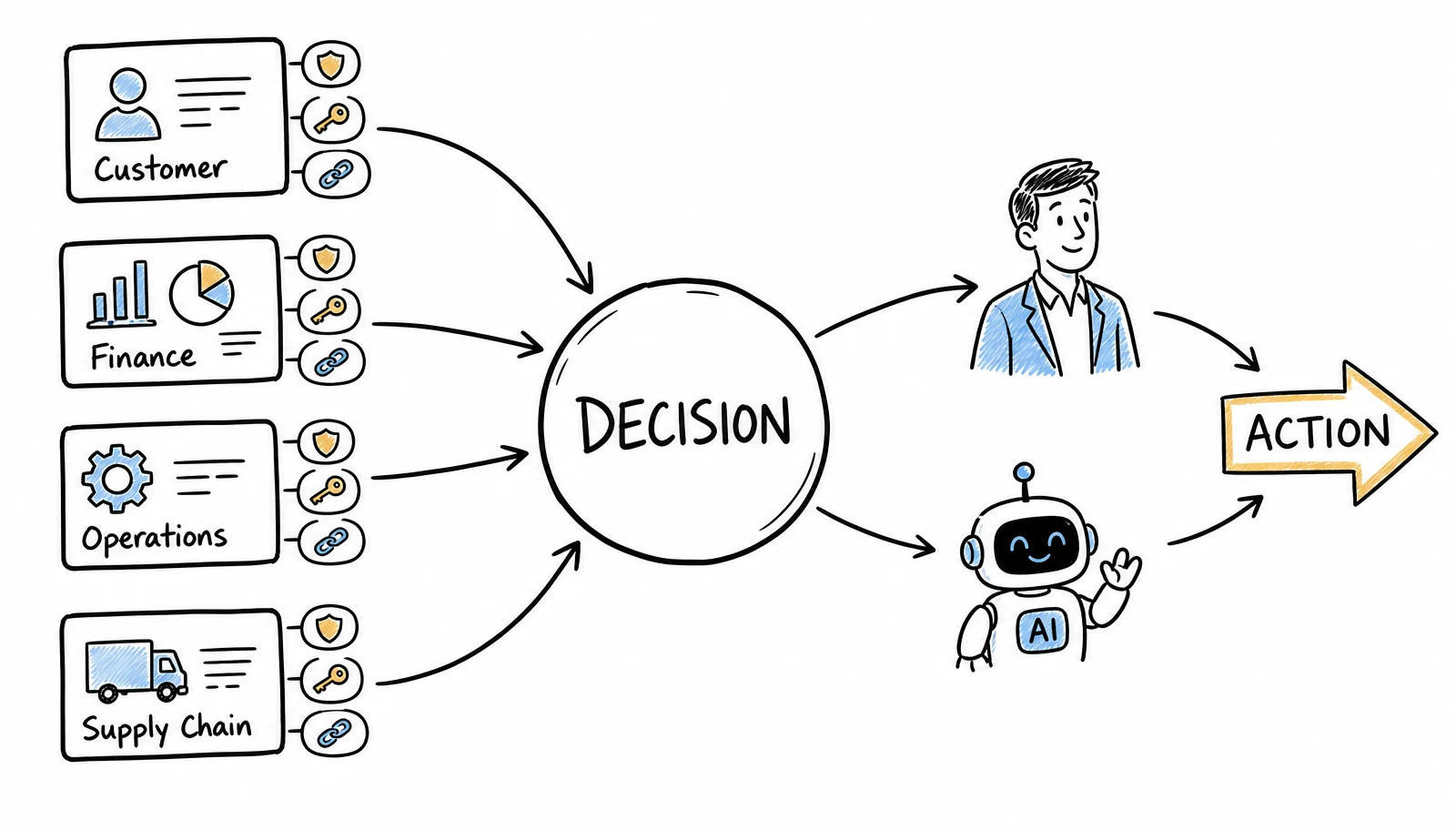
  • Every data product anchors on a decision or process with a named owner.
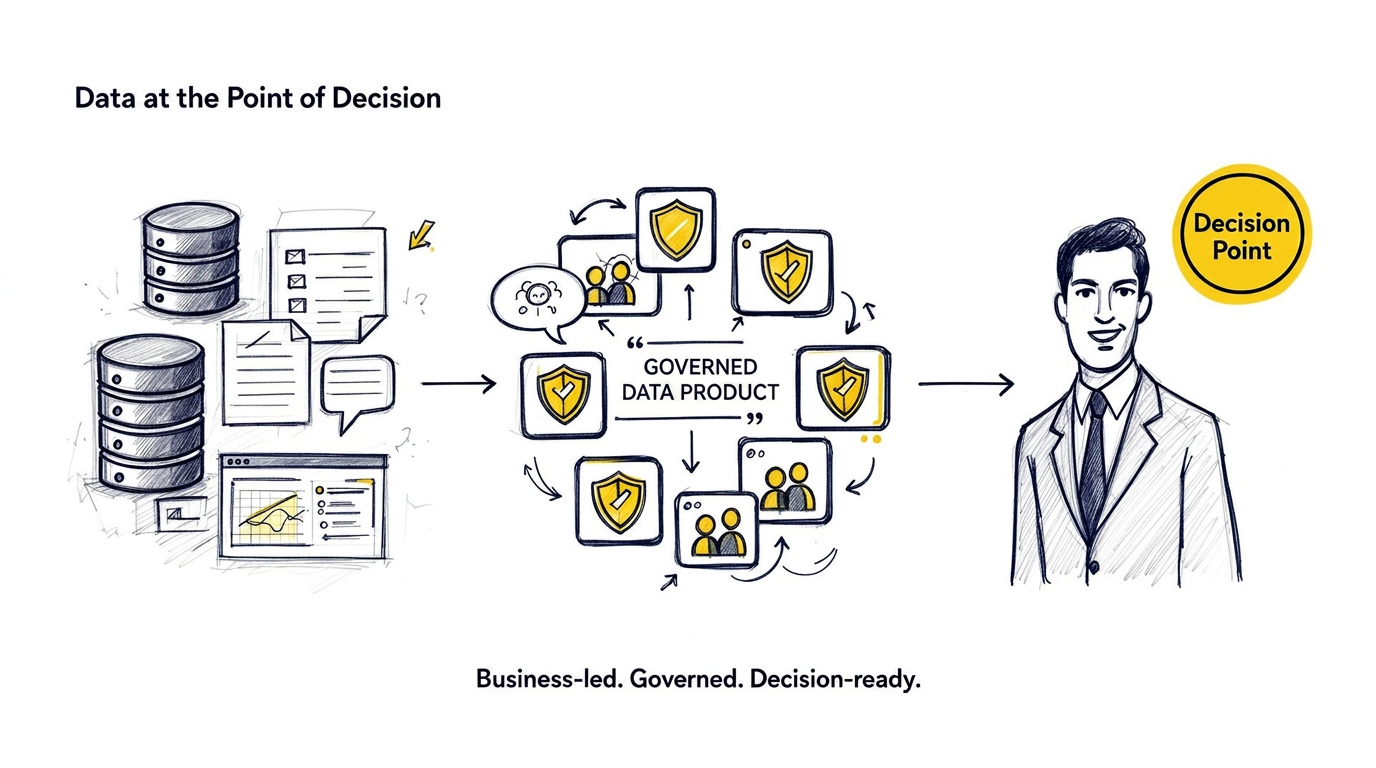
  • Quality, lineage, ownership and meaning are packaged together.
  • Build is industrialized. Reuse is the default.
The Data Tiles framework
  1. Stage 1

    Anchor

    Anchor each product on a decision or business process.

    What to do

    Define the consumer, the decision, and the value.

    Where it gets stuck

    Starting from the source system, not the consumer.

  2. Stage 2

    Package

    Package quality, lineage, ownership and meaning with the data.

    What to do

    Use a template that enforces the full bundle.

    Where it gets stuck

    Treating metadata as a separate workstream.

    How Latttice helps

    Latttice enforces the bundle by default.

  3. Stage 3

    Industrialize

    Make the build path repeatable without replatforming.

    What to do

    Pick one pattern and use it for the next ten products.

    Where it gets stuck

    Reinventing the build for every domain.

    How Latttice helps

    Latttice industrializes the build on your existing stack.

  4. Stage 4

    Operate

    Give business owners the controls they need to own outcomes.

    What to do

    Hand the operating surface to the business owner, not IT.

    Where it gets stuck

    No tooling for business ownership.

    How Latttice helps

    Latttice provides the business-owner operating surface.

Practical roadmap
First 30 days
  • · Choose three decisions or processes for the first wave.
  • · Define the bundle template.
  • · Assign business owners.
Next 60 days
  • · Build the first three products using the standard pattern.
  • · Publish them with full trust signals attached.
  • · Begin measuring reuse.
Next 90 days
  • · Onboard the next wave of products using the same pattern.
  • · Make business ownership the default, not the exception.
  • · Show reuse and time-to-value improvements to the executive sponsor.
Prioritize
  • · Decisions with clear owners and measurable value.
  • · Domains with willing business sponsors.
Avoid
  • · Renaming existing data sets as data products.
  • · Letting governance lag the build.
  • · Building bespoke patterns per team.
Common mistakes
  • · Treating data products as a naming convention.
  • · Allowing ownership to stay with IT.
  • · Building without instrumentation for reuse.
How Data Tiles helps

We help you set the build pattern, package trust signals into the product, and put business owners in control without replatforming.

How Latttice enables this
StageChallengeCapabilityBusiness outcome
DiscoverTeams cannot find or trust the data behind trusted data products.Latttice publishes data products with business meaning, ownership and trust signals attached.Faster reuse, less duplication, fewer escalations.
BuildBuilding trusted data products repeatably without replatforming.Latttice industrializes data product build on top of the existing stack.Lower cost to build and operate, faster time to value.
GovernGovernance lags behind delivery.Latttice attaches quality, lineage, ownership and policy signals to every data product.Active governance without a manual review bottleneck.
OperateOwnership defaults to IT after launch.Latttice gives business owners the controls they need to take real accountability.Sustained business ownership and trust over time.
Executive checklist
  • Every data product has a named business owner.
  • Quality, lineage, ownership and meaning travel with the product.
  • The build pattern is repeatable across domains.
  • Reuse is measured and improving.

Want help applying this guide?

We help executives sequence the work, prove value on a priority decision and scale with Latttice and Lenz where it matters.