How to Move from Traditional to Active Governance
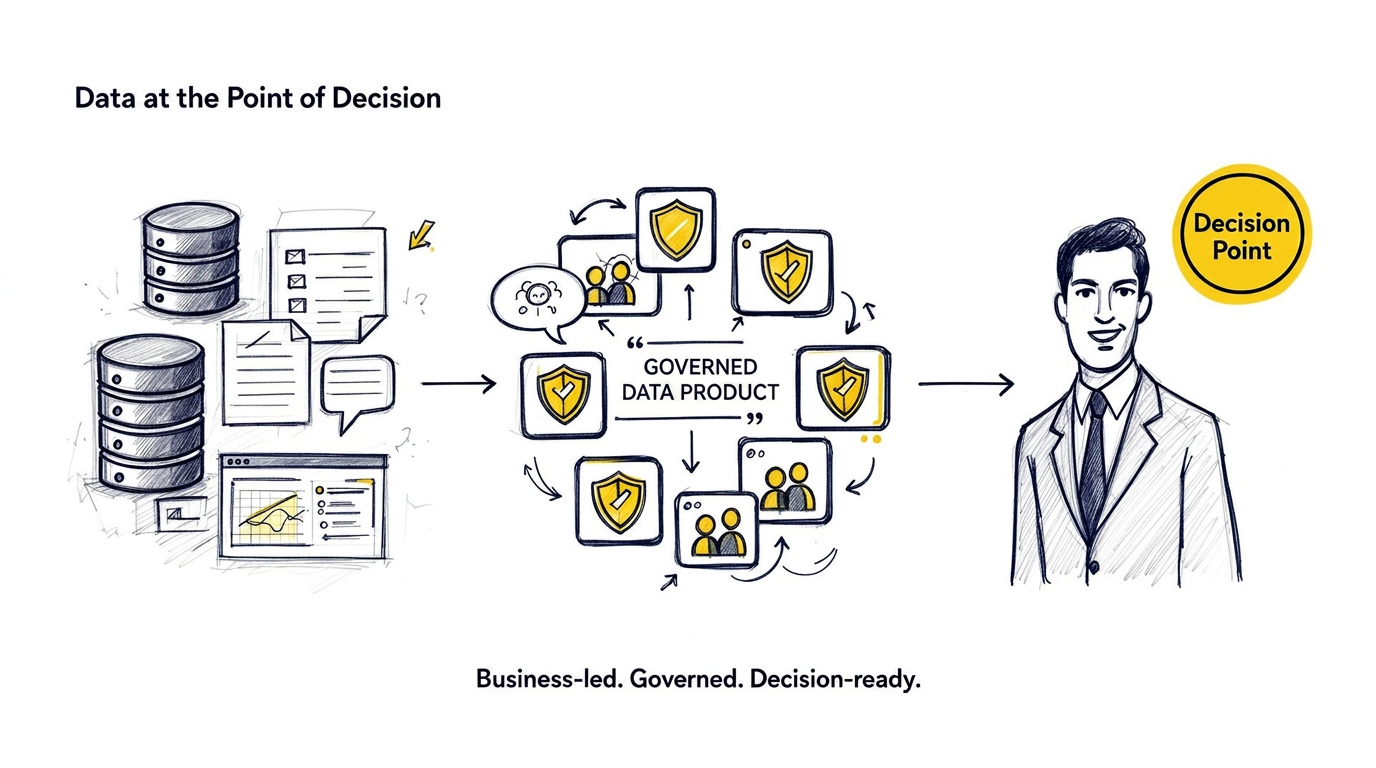
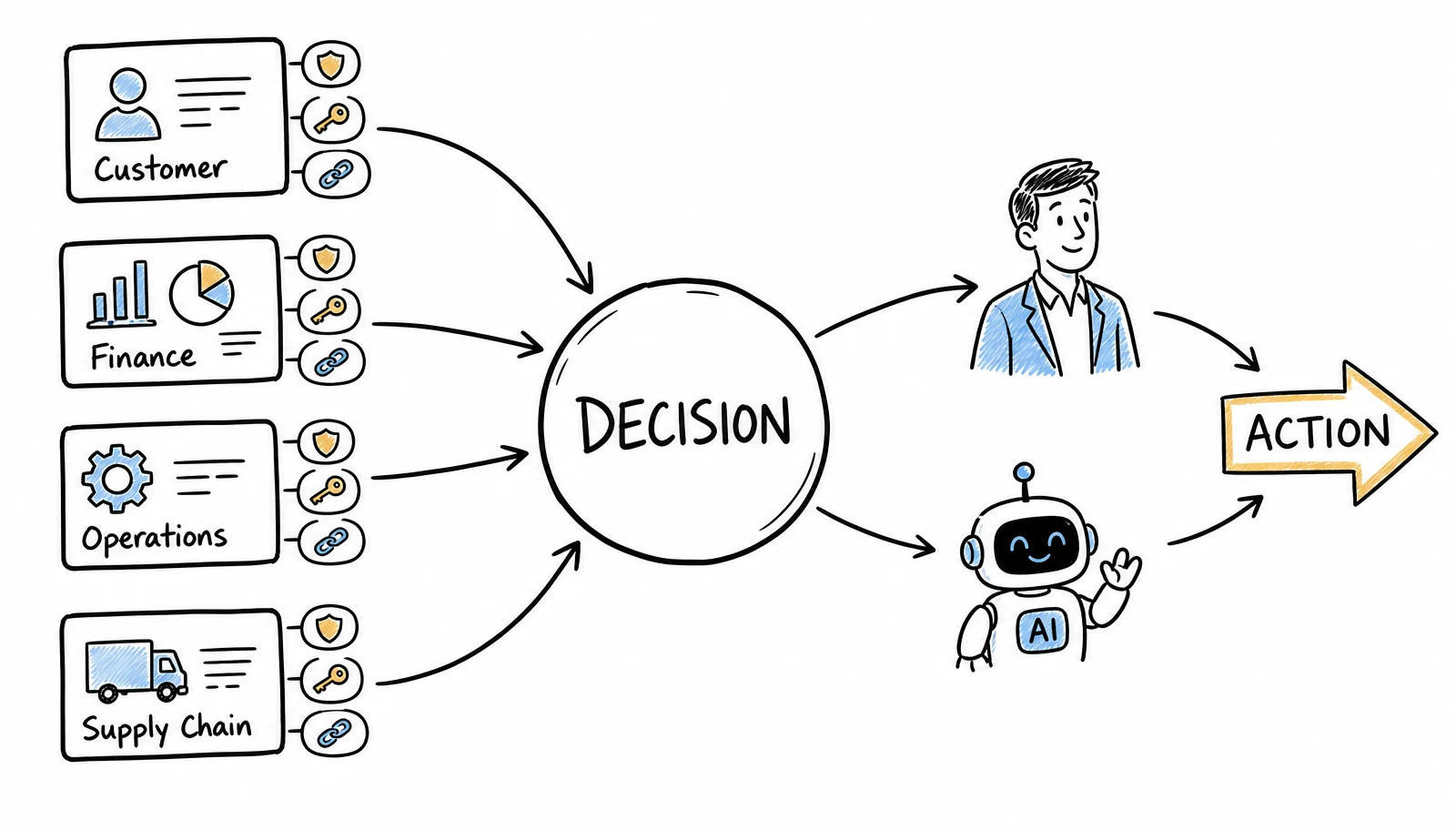
Evolve governance from documentation and councils to active signals that run at the point of decision.
Cataloging and policy work has built the documentation layer. The next step is to make that work active: visible to the systems and people making decisions.
- · Catalogs are populated but underused.
- · Policies exist but cannot be enforced at runtime.
- · Governance is perceived as friction, not enablement.
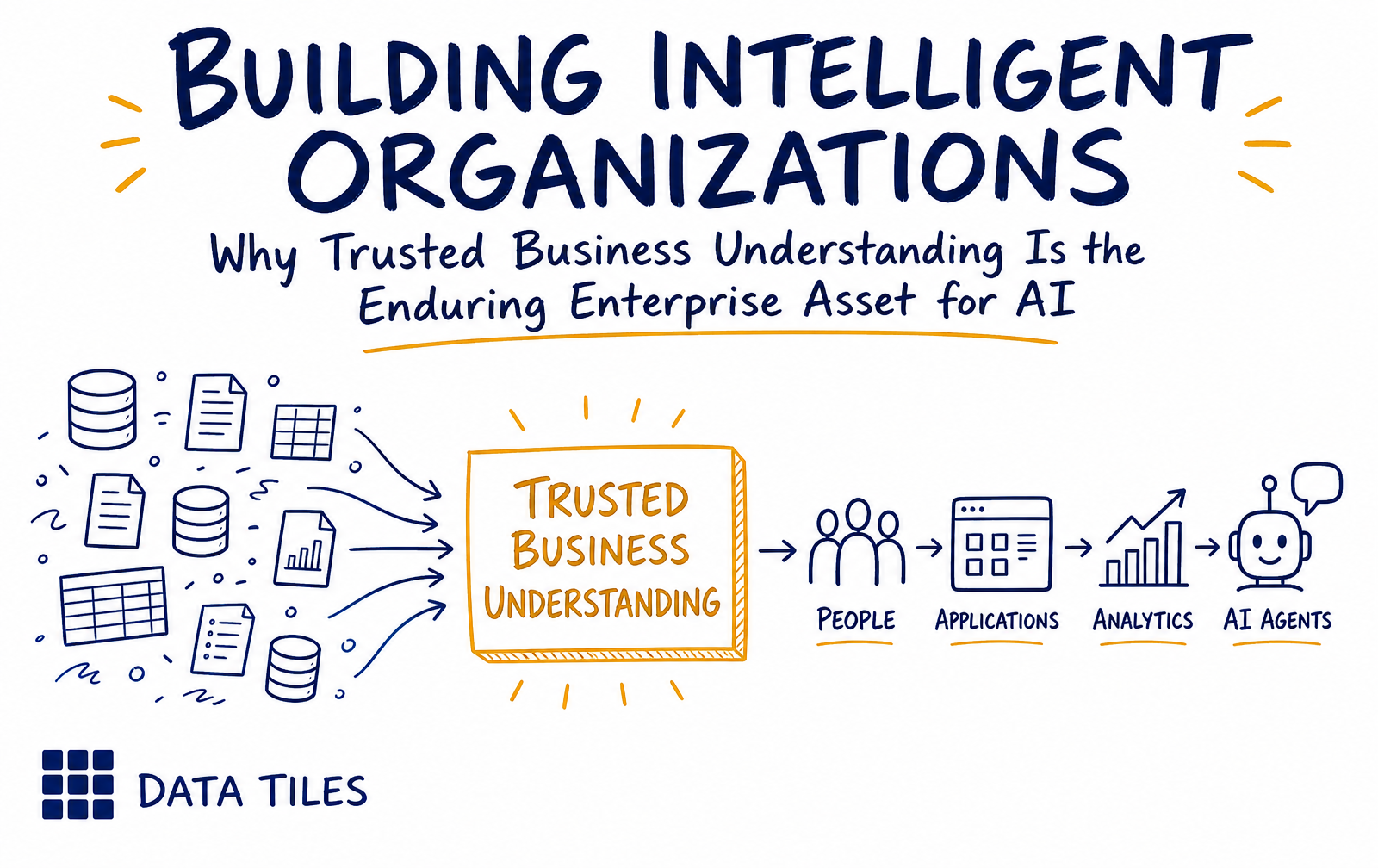
- Catalog and policy investment is exposed as machine-readable signals.
- Signals flow to the systems where decisions happen.
- Governance accelerates delivery instead of slowing it.
- Stage 1
Expose
Expose existing catalog and policy work as machine-readable signals.
What to doConnect catalog and policy systems to a signal layer.
Where it gets stuckCatalog and runtime are disconnected.
How Latttice helpsLatttice exposes governance work as active signals.
- Stage 2
Distribute
Distribute signals to the systems where decisions happen.
What to doRoute trust, quality and policy signals to consumption points.
Where it gets stuckNo distribution layer.
- Stage 3
Measure
Measure the active value of governance, not the documentation count.
What to doTrack how often signals influence decisions.
Where it gets stuckOld metrics measure documentation, not action.
- · Inventory existing catalog and policy assets.
- · Identify three runtime systems to receive signals first.
- · Stand up the signal layer.
- · Distribute signals to those three systems.
- · Roll out signal distribution across priority consumption points.
- · Retire metrics that measure documentation for its own sake.
- · High-value consumption points.
- · Policies that already have buy-in.
- · Replacing your catalog.
- · Treating active governance as a tool swap.
- · Treating active governance as a replacement, not an evolution.
- · Underestimating the change management.
- · Measuring artefacts instead of action.
We help you expose existing governance investment as active signals via Latttice, and integrate them with the systems where decisions actually happen.
| Stage | Challenge | Capability | Business outcome |
|---|---|---|---|
| Discover | Teams cannot find or trust the data behind active governance. | Latttice publishes data products with business meaning, ownership and trust signals attached. | Faster reuse, less duplication, fewer escalations. |
| Build | Building active governance repeatably without replatforming. | Latttice industrializes data product build on top of the existing stack. | Lower cost to build and operate, faster time to value. |
| Govern | Governance lags behind delivery. | Latttice attaches quality, lineage, ownership and policy signals to every data product. | Active governance without a manual review bottleneck. |
| Operate | Ownership defaults to IT after launch. | Latttice gives business owners the controls they need to take real accountability. | Sustained business ownership and trust over time. |
- Catalog and policy assets are exposed as signals.
- Signals reach priority consumption systems.
- Governance value is measured by action, not artefacts.
Where to go next in the Decision-Driven Executive Series
- 01Recommended assessmentGovernance Operational Assessment
Baseline your organization against this outcome.
- 02Related executive frameworkActive Governance Framework
Governance that runs at the point of decision, not in documentation.
- 03Related productLatttice
- 04Related productCollibra Analyzer
- 05Watch a demoSee Latttice and Lenz in action
A guided walkthrough of trusted data products and governed AI.
- 06Contact Data TilesTalk to Data Tiles
Discuss your decision-driven roadmap with our team.
Want help applying this guide?
We help executives sequence the work, prove value on a priority decision and scale with Latttice and Lenz where it matters.